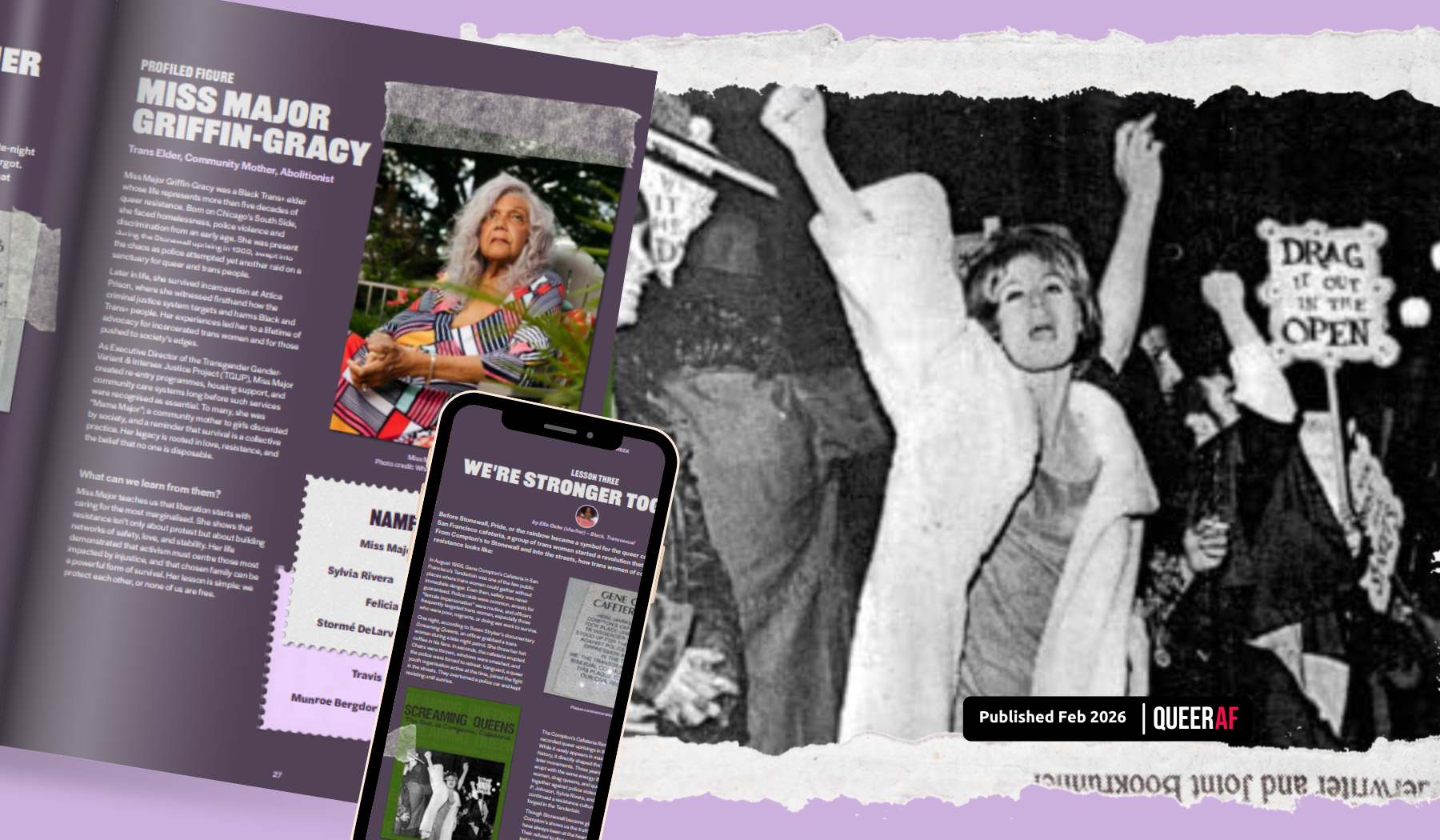

Before Stonewall, Pride, or the rainbow became a symbol for the queer community, a group of trans women started a revolution that history almost forgot in a late-night San Francisco cafeteria. From Compton’s to Stonewall and into the streets, trans women of colour have taught us what resistance looks like.
In August 1966, Gene Compton’s Cafeteria in San Francisco’s Tenderloin was one of the few public places where trans women could gather without immediate danger. Even then, safety was never guaranteed.
Police raids were common, arrests for “female impersonation” were routine, and officers frequently targeted trans women, especially those who were poor, migrants, or doing sex work to survive.
One night, according to Susan Stryker’s documentary Screaming Queens, an officer grabbed a trans woman during a late-night patrol. She threw her hot coffee in his face. In seconds, the cafeteria erupted.
Chairs were thrown, windows were smashed, and the police were forced to retreat. Vanguard, a queer youth organisation active at the time, joined the fight in the streets. They overturned a police car and kept resisting until sunrise.
The Compton’s Cafeteria Riot is one of the earliest recorded queer uprisings in the United States. While it rarely appears in mainstream LGBTQIA+ history, it directly shaped the tactics and spirit of later movements.
Three years later, Stonewall would erupt with the same energy: Black and Latina trans women, drag queens, and queer youth standing together against police violence. People like Marsha P. Johnson, Sylvia Rivera, and Stormé DeLarverie continued a resistance culture that had already been forged in the Tenderloin.
Though Stonewall became globally known, Compton’s shows us the truth: trans women of colour have always been at the heart of queer liberation. Their refusal to disappear created the foundation for today’s fights, whether against anti-trans legislation, racist policing, or rising far-right hostility.
What can we learn from this history?
Compton’s teaches us that collective resistance is powerful. When systems are designed to isolate and target people, solidarity becomes a survival tool. Trans women didn’t fight alone.
They acted as a community, protecting one another when no one else would. The events in 1966 show that liberation movements are strongest when those at the margins lead and the wider community listens. The blueprint for queer resistance has always been rooted in unity, defiance, and mutual care.
Time to do the workbook
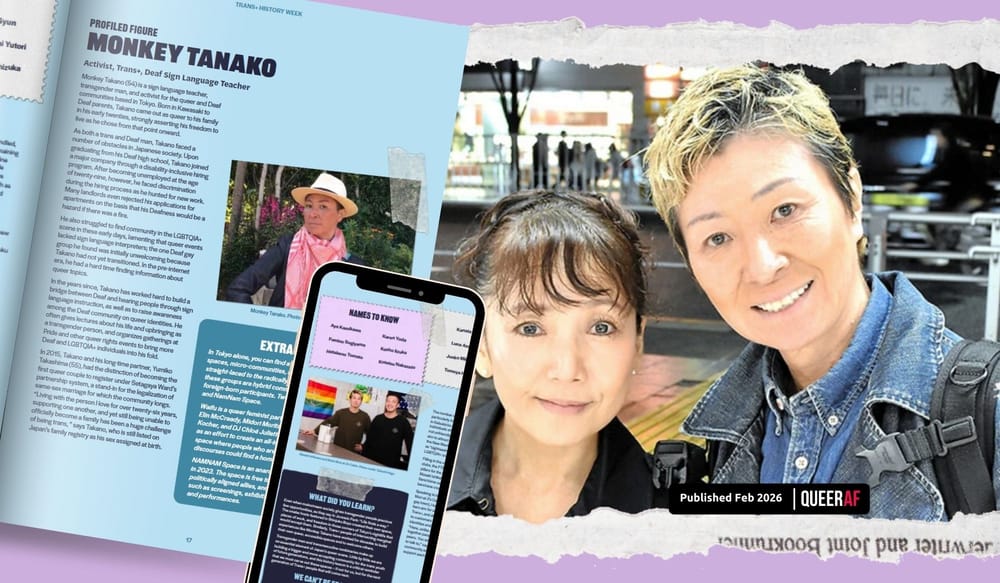
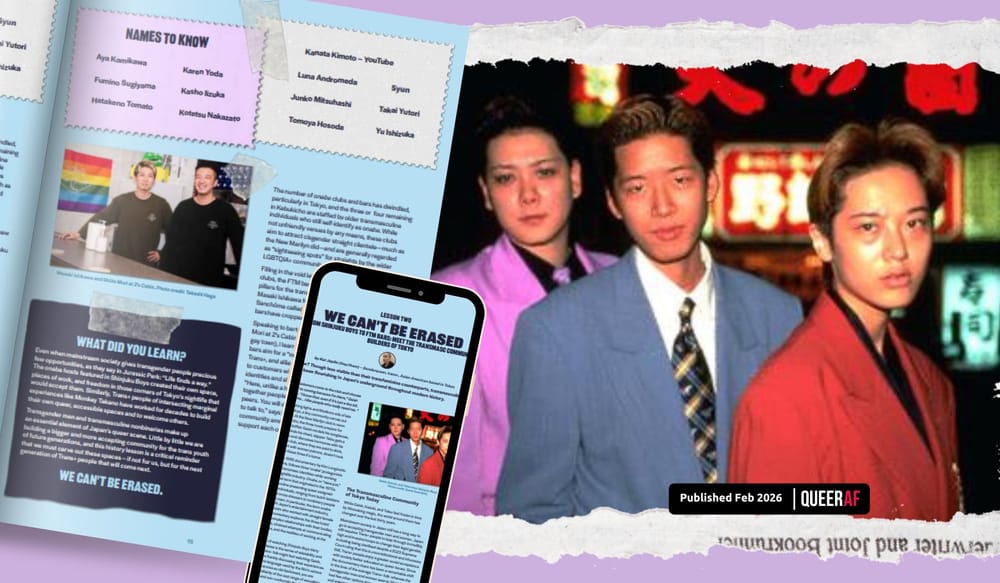
The 2026 Trans+ History Week workbook is the ultimate toolkit for shutting down lies about Trans+ people
This year, QueerAF produced the workbook for Trans+ History Week. We mentored five Trans+ researchers and writers to put it together through over 80 hours of research.
That work was spearheaded by lead researcher Gray Burke-Stowe, who ensured the stories have accurate and rich historical sources.
Download it now to immerse yourself in stories of the Lango people of Uganda or the legacy of Miss Major, tracing back to Comptons Cafeteria.
Or maybe you're intrigued by how gender diversity has shown up throughout history, or the trans masc (no longer) underground scene in Tokyo?
Get your copy now, to help us get the word out: We've always been here, we can't be erased, we're more than Trans+, and crucially, we're stronger together.