Did you know that ‘heteroflexibility’ has become the fastest-growing sexual orientation on the sex positive dating app Feeld, according to their 2025 dating report? It’s a term for those who identify as mostly straight but remain open to rare or situational same-gender experiences.
Although not a new term or one widely used in most queer spaces, apparently the number of those using this label on the app — notably one of the few apps where you can identify as straight but still choose to match with those of the same gender — has tripled to almost a tenth of users.
Some see this change as welcome evidence of a rise in sexual fluidity. Others are tired of those wearing queerness as fashion, without doing the work of meaningful allyship, or joining the community to stand up to the prejudice that still exists.
It’s not dissimilar to the themes behind the controversies around queer-baiting, where celebrities have been criticised for presenting as sexually ambiguous or queer-coded (without being out) to gain buy-in from queer audiences.
Harry Styles, who is currently dating actress Zoe Kravitz, recently poked fun at these long-time accusations on SNL, while hinting at his own sexual fluidity. “People seem to pay a lot of attention to the clothes I was wearing, and some people accused me of something called ‘queerbaiting,’” he said, before kissing a male cast member. “Did it ever occur to you that maybe you don’t know everything about me, dad? I ran it past him, he was fine with it.”
There are several other high-profile examples of this language of openness. Recently, Kendall Jenner said she was “not closing doors to experiences” when discussing her sexuality on the podcast In Your Dreams With Owen Thiele. Similarly, Bad Bunny told the Los Angeles Times that he was heterosexual, but added, “I don’t know if in 20 years I will like a man. One never knows.”
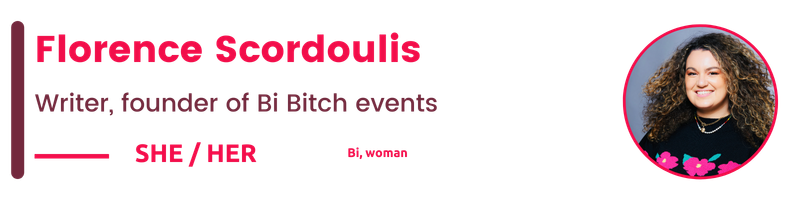
As a bisexual woman, I believe any increased acceptance around sexual fluidity and any evolution of language that helps us understand ourselves better is positive. No label is more valid than another. All that matters is that it feels right for you. It’s never too late to explore your identity, or change your mind — and you don’t owe anyone else an explanation.
Similarly to ‘questioning’ or ‘bicurious’, for some, the label ‘heteroflexible’ may also feel more accessible as a gateway tool while figuring yourself out. It’s ok to normalise that and meet people where they’re at.
Yet, it’s interesting that so much of its definition sounds like being on the bi+ spectrum of romantic and/or sexual attraction to multiple genders — after all, every bi person is different in terms of how they feel attraction.
The fact that millennials like me, who grew up bombarded by biphobic and homophobic messaging, are the largest group identifying as heteroflexible at two-thirds (compared to 18% of Gen Z, who are currently driving a more open bisexual boom) sets off some alarm bells.
From compulsory heterosexuality to internalised homophobia and biphobia, what does the appeal of this less-committal term say about the historic negative baggage loaded onto bisexuality and queerness for our generation?
I’ve heard, too, that heteroflexibility can feel more accessible to bi people in straight-passing relationships — but this may play into the pressure to prove ourselves which is so inherent in the systematic invalidation of bisexuality, exacerbating the invisible bi+ mental health crisis.
It is also difficult to untangle heteroflexibility — and its disassociation from queerness — from our scary cultural context. From the DEI crackdown coming over from across the pond, to Reform’s apparent plans to banish the Equality Act 2010, to the Supreme Court’s recent transphobic ruling, it’s never felt more like hard-won LGBTQIA+ rights are under attack.
So, it is understandable that terms like heteroflexibility might create an illusion of safety. But I fear there is something closeted and isolating about this label, that seems more about actions and sexual preference than identity.
Notably, this data is primarily based on app usage. I’ve never heard anyone use the term in-person, including during the many hundreds of conversations I’ve had in the last year when spending time with bi+ people at over 20 Bi Bitch community events in the UK and online.
Queerness is about so much more than who you sleep with: it’s identity, culture, community. By rejecting that, you risk missing out on that joy, belonging and support, including your responsibility to uplift other more marginalised LGBTQIA+ groups.
Ultimately, we all just want to feel safe to be our authentic selves. I am wholly supportive of everyone identifying in whatever way feels most like home — heteroflexibility included. But we must not separate ourselves from reality and our responsibilities in the process.
In an era when our rights are so acutely under attack, we need to come together as a community and decide not to let ourselves be divided and ruled by prejudice. Our power lies in our broad church and the support of allies, and we must not forget it.
Get the Queer Gaze in your inbox each week with our free weekly newsletter or pitch to write an edition for us now.
We deserve good news too.
When there is so much hate out there, it's easy to get swept up in the doom.
QueerAF doesn't do that. We sprinkle in the joy that is the lifeblood of why being LGBTQIA+ is so simply wonderful.
And in the newsletter where this was first published, there was actually a bunch of positive news to celebrate. It shows me that despite the headlines knocking us down, we're getting right back up again and using our anger to fuel our fight.
While the rest of the media cashes in on hate about us, we can focus on queer joy - because you drive us. The community. QueerAF readers - not advertisers.
Our members directly fund our content. When you sign up, you get to have your say on how your funds are used. On what content we should commission.
But we turn down advertising and sponsorships in this newsletter so we can focus on delivering on content for you, not just clicks. That's why we need you to sign up to become a QueerAF member.
You'll join hundreds of awesome queer as f**k members who ensure we can keep our unique approach to queer content happen. If you want to see the media cover more stories about the joy in our lives - please, consider a membership. We can't run our outlet without you.