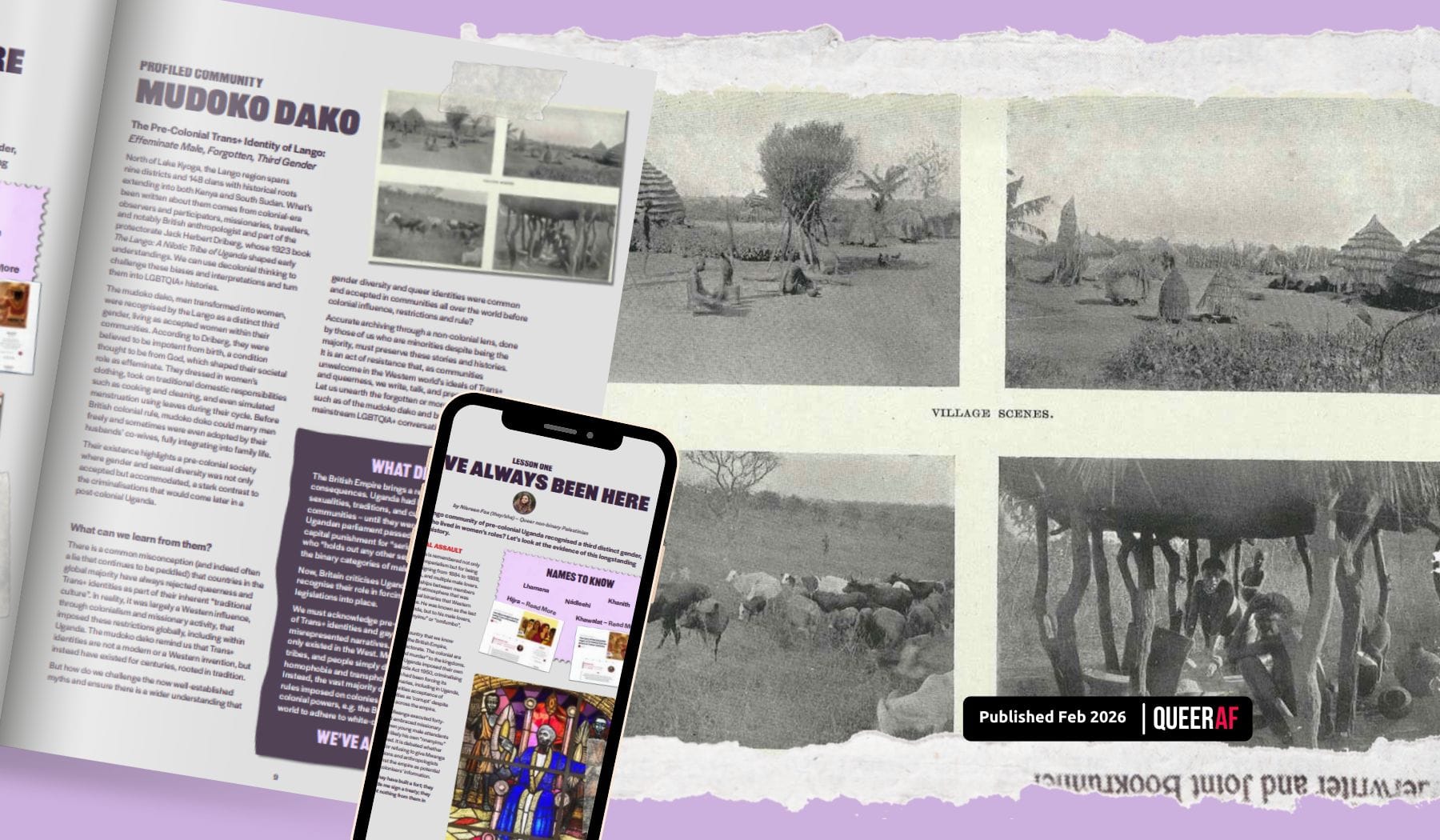
North of Lake Kyoga, the Lango region spans nine districts and 148 clans with historical roots extending into both Kenya and South Sudan.
What’s been written about them comes from colonial-era observers and participators, missionaries, travellers, and notably British anthropologist and part of the protectorate Jack Herbert Driberg, whose 1923 book The Lango: A Nilotic Tribe of Uganda shaped early understandings. We can use decolonial thinking to challenge these biases and interpretations and turn them into LGBTQIA+ histories.
The mudoko dako, men transformed into women, were recognised by the Lango as a distinct third gender, living as accepted women within their communities. According to Driberg, they were believed to be impotent from birth, a condition thought to be from God, which shaped their societal role as effeminate.
They dressed in women’s clothing, took on traditional domestic responsibilities such as cooking and cleaning, and even simulated menstruation using leaves during their cycle. Before British colonial rule, mudoko doko could marry men freely and sometimes were even adopted by their husbands’ co-wives, fully integrating into family life.
Their existence highlights a pre-colonial society where gender and sexual diversity was not only accepted but accommodated, a stark contrast to the criminalisations that would come later in a post-colonial Uganda.
There is a common misconception (and indeed often a lie that continues to be peddled) that countries in the global majority have always rejected queerness and Trans+ identities as part of their inherent “traditional culture”.
In reality, it was largely a Western influence, through colonialism and missionary activity, that imposed these restrictions globally, including within Uganda. The mudoko dako remind us that Trans+ identities are not a modern or a Western invention, but instead have existed for centuries, rooted in tradition.
But how do we challenge the now well established myths and ensure there is a wider understanding that gender diversity and queer identities were common and accepted in communities all over the world before colonial influence, restrictions and rule?
What can we learn from this history?
Accurate archiving through a non-colonial lens, done by those of us who are minorities despite being the majority, must preserve these stories and histories.
It is an act of resistance that, as communities unwelcome in the Western world’s ideals of Trans+ and queerness, we write, talk, and preserve work.
Let us unearth the forgotten or more unknown stories, such as of the mudoko dako and bring them into the mainstream LGBTQIA+ conversation.
Time to do the workbook
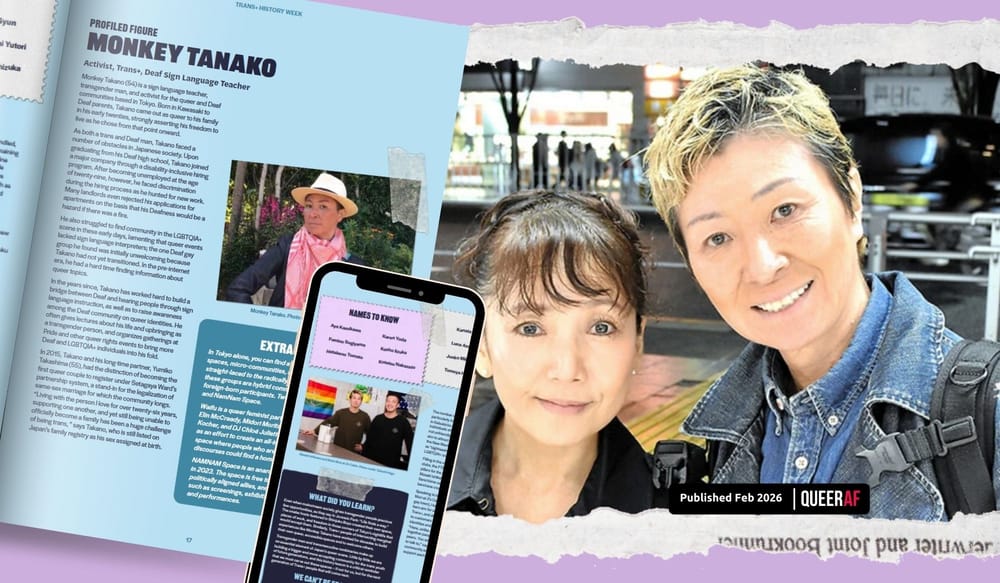
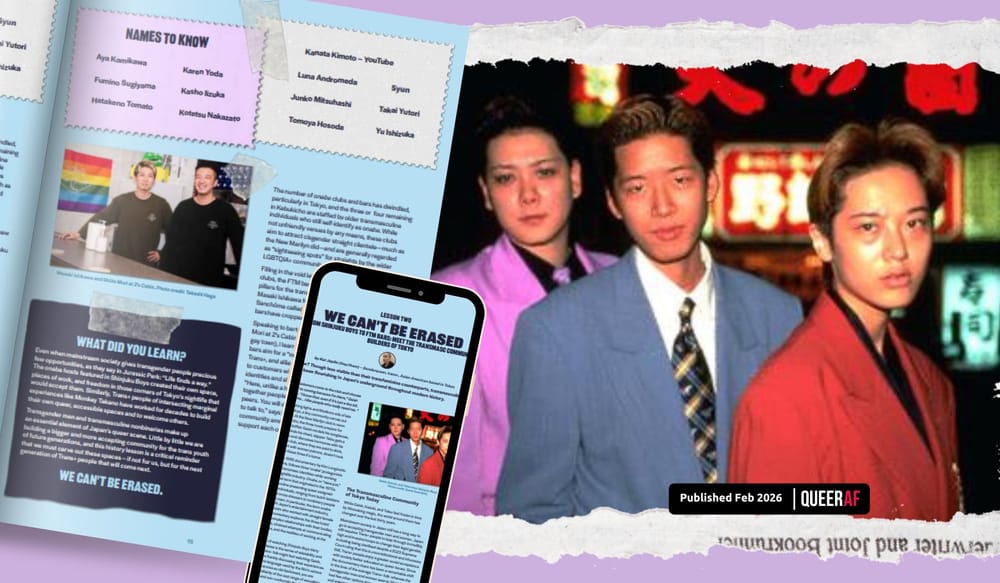
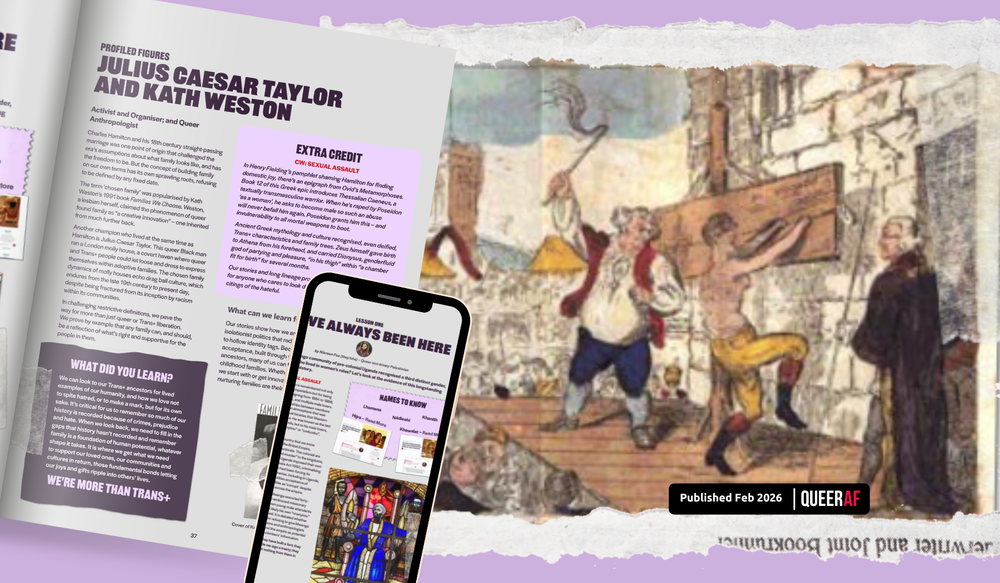
The 2026 Trans+ History Week workbook is the ultimate toolkit for shutting down lies about Trans+ people
This year, QueerAF produced the workbook for Trans+ History Week. We mentored five Trans+ researchers and writers to put it together through over 80 hours of research.
That work was spearheaded by lead researcher Gray Burke-Stowe, who ensured the stories have accurate and rich historical sources.
Download it now to immerse yourself in stories of the Lango people of Uganda or the legacy of Miss Major, tracing back to Comptons Cafeteria.
Or maybe you're intrigued by how gender diversity has shown up throughout history, or the trans masc (no longer) underground scene in Tokyo?
Get your copy now, to help us get the word out: We've always been here, we can't be erased, we're more than Trans+, and crucially, we're stronger together.