

TL;DR: A new report has found that the mental health of nearly every single trans person in the UK has been impacted by transphobia. Writing for QueerAF, TransActual policy lead Tammy Hymas shares her perspective on the report and says the findings make clear why many Trans+ people might be feeling powerless right now.
“Together, we are so much stronger, and we are so much more powerful than sometimes we can feel.”
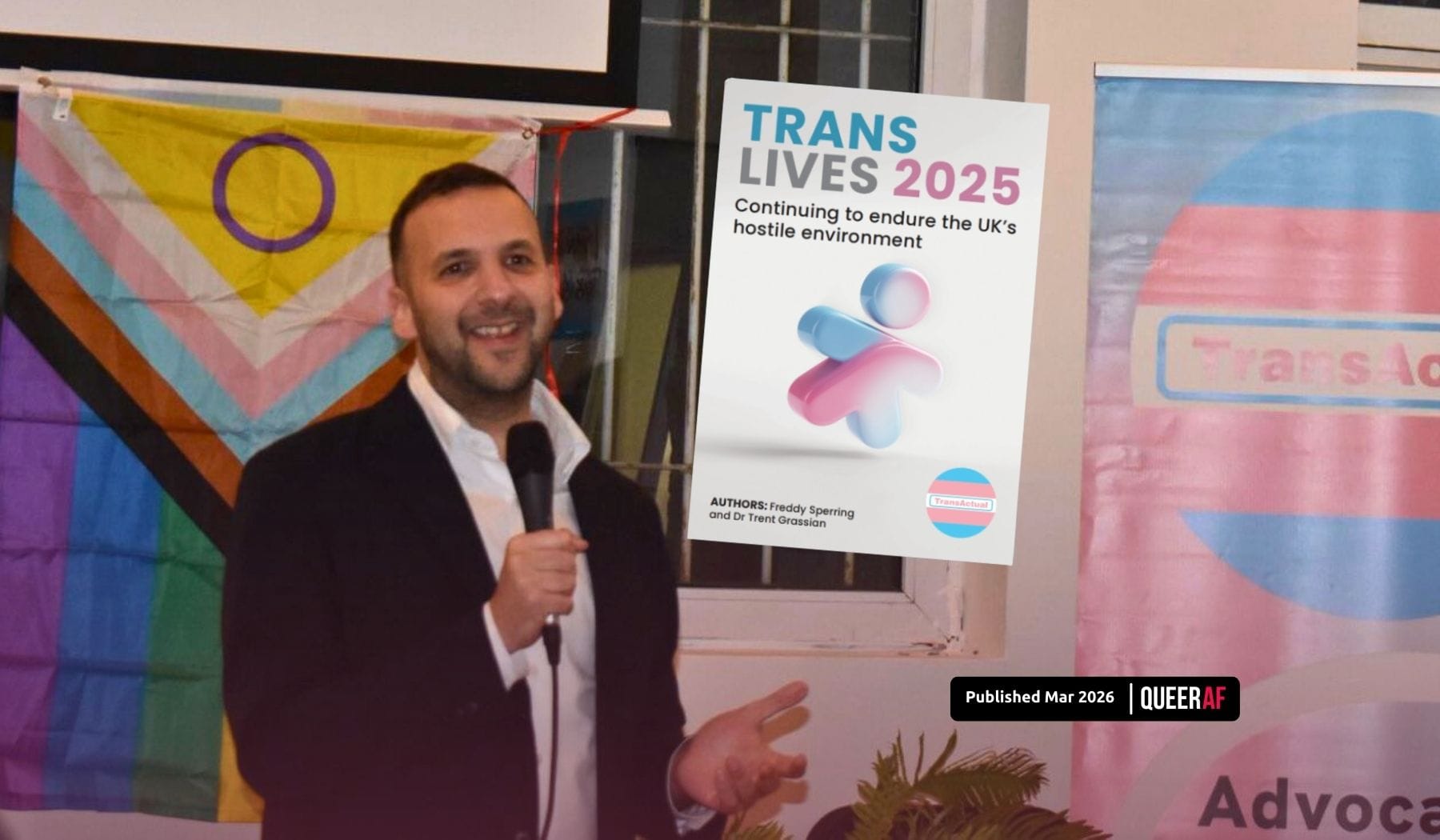
The words of Green Party leader Zack Polanski, at the launch of TransActual’s report TransLives 2025, a landmark survey of the experiences of more than 4,000 trans, non-binary and intersex people who also identify as trans in the UK.
The findings make clear why many Trans+ people might be feeling powerless right now. Shockingly, 97% of those surveyed had experienced transphobia, whilst seven in ten trans people experienced hate in public from strangers.
It’s notable that these results were collected at the start of 2025 – before the Supreme Court ruling unleashed a wave of exclusion, segregation and harassment of the trans community.
Nearly every single one of our respondents (99%) told us that transphobia was having an impact on their mental health. And since then, as TransActual research in the wake of the ruling showed, the emotional impact of this well-funded anti-trans lawfare has been staggering for trans people.
This hostile environment for trans people, where barely a day goes by without a degrading story in the press, or a politician whipping up hatred on social media or in parliament, is having material impacts on trans people’s everyday lives.
Just under half of the respondents told us they had experienced transphobia in a healthcare setting, with a third telling us they avoid going to A&E because they do not trust that the care they receive will be free from discrimination.
Whilst the impact of the long waiting times for gender-affirming care is well documented, these findings about the prevalence of trans people avoiding non-transition-related healthcare go some way to explain why trans people are far more likely to experience long-term health conditions than the general population.
In his speech to more than 100 people assembled for the launch of this report, Polanski made the point that many of the challenges outlined in the report are not unique to trans people.
One in four of those surveyed told us they have experienced housing insecurity – a common experience for working-class people in the context of decades of underinvestment in social housing.
Equally, the fact that just 13% of respondents were able to access gender-congruent ID and the impact this has on trans people’s ability to move freely through the world will resonate with migrants across the UK who are denied access to jobs, housing and healthcare as a result of complex Home Office identification systems.
Our report clearly shows the relentless creep of far-right narratives and policies into the UK mainstream – depriving us of healthcare, stripping us of the privacy that comes with self-determination and whipping up harassment and violence against us.
A pattern which has seen the Lemkin Institute for Genocide Prevention assessing in June 2025 that the UK’s current policies towards trans and intersex people meet the ninth pattern of genocide.
Yet, there is a message of hope. Something that stayed with me from the report's launch event is that standing against hate, injustice and inequality means standing firmly with the Trans+ community. That’s the power we have to turn the tide.

I've said this before, and I'll say it again - this is a pivotal moment for the world.
It's an acutely scary one for anyone from an underrepresented background, whether they be LGBTQIA+, Black, migrant or otherwise marginalised.
But that doesn't mean the future is hopeless. Far from it.
I've been proudly pursuing a queer militant agenda ever since I could stick a rainbow badge on my t-shirt. I know, so well, that we're a freakin' bunch who don’t take no for an answer.
Trust us when we say, in a new age of deep fakes making cash for tech bros, a crisis lack of investment the LGBTQIA+ charity sector, and continued misinformation about us from the mainstream press, we are going to double down on our efforts to:
- Invest in a new generation of LGBTQIA+ journalists to help you understand the queer news
- Deliver quality investigative journalism and analytical explainers so you can hold power to account
- Show you the light in the darkness, so that even when our analysis needs to express urgency, you'll leave this newsletter feeling able to see the joy our community gives and gives.
We can't do it without you, so if you can - please start your monthly or annual membership to this newsletter, so we can help even more people fight back.