I spend a lot of time building communities of bi+ folks like me, and I hear first-hand about the — often invisible — challenges we’re facing.
So when I saw recent reports that the number of those identifying as bisexual in the UK has more than tripled in the last decade, with under-35s and specifically women driving this increase, I wasn’t surprised.
It also revealed a minor dip in numbers in the past year. Again, this strangely makes sense: the more visible we are, the more we’re confronted by biphobia and the more this pushes us back into the closet.
The results of these studies are less about our actual numbers, and more of a thermostat of how safe and accessible it is to be bisexual today. Thanks to the internet, social media and dating apps, we have so much more access to information and options than previous generations – but we’ve always existed, and always will.
Nonetheless, several media outlets jumped on this apparent decline, asking: ‘Has the bisexual “trend” started to reverse?’
It is so dangerous to talk about identities as fashion. These kinds of headlines reinforce fundamental biphobic tropes that contribute to our erasure, as well as those that perpetuate disproven myths of ‘social contagions’.
Although bi people comprise half of the LGBTQIA+ community according to the last census, there are proportionately few bi-specific spaces. Not only is our identity constantly invalidated, but so is the discrimination that comes with it, for example by the concept of ‘bi privilege’. Such a con!
We experience biphobia from both within the LGBTQIA+ community, where we’re seen as ‘not queer enough’, as well as outside of it. Research in 2020 found that 4 in 10 (43%) of bi people have never attended a queer event, and 3 in 10 (27%) of bi women have experienced discrimination from within LGBTQIA+ community.
The biphobic reaction to singer Jojo Siwa after she started dating Chris Hughes, having previously identified as a lesbian, is a present and vivid example of what this can look like.
For women, biphobia is overly-sexualised, which gives us mainstream currency under the male gaze. For men, it’s supposedly emasculating, which can make it much harder to come out and may explain why almost double the number of UK women as men identify as bisexual, according to ONS.
No wonder it’s tempting to go back into the closet! The more visible we’ve become, the louder the backlash and the sharper the retreat. This isn’t even an acutely bisexual phenomenon either - Trans+ people are facing the same dilemma in the face of rising anti-Trans+ movements.
Consider the rise of new labels, too, like ‘heteroflexible' for those who are ‘mostly straight’ but open to same-sex experiences – which Feeld recently declared the fastest-growing sexuality, especially for millennials. I’m all for embracing whatever label feels authentic. But this particular label may also be symptomatic of negative responses to increased bisexual audibility: a bid to shrug off the historic misconceptions and dodge the baggage so loaded onto an identity that has become frankly unappealing. Ironically, in doing so, this label could add to some of the worst biphobic tropes.
Yet, wherever you identify on the spectrum of attraction to multiple genders, there is a cost: we are in an invisible bisexual health crisis. Bi women have the worst long-term physical and mental health outcomes of any sexuality, the highest levels of anxiety, at 72% and the lowest life expectancy out of women. As for bi men, 4 in 10 (43%) have reported feeling like life wasn’t worth living, and just over half (56%) have anxiety.
If the ‘B’ in LGBTQIA+ continues to exist in isolation, biphobia will continue to thrive no matter how many of us there are.
The fastest way to reclaim our agency is to unlock our bi+ community, so we can feel safer and more supported to stay ourselves in a world that denies our existence.
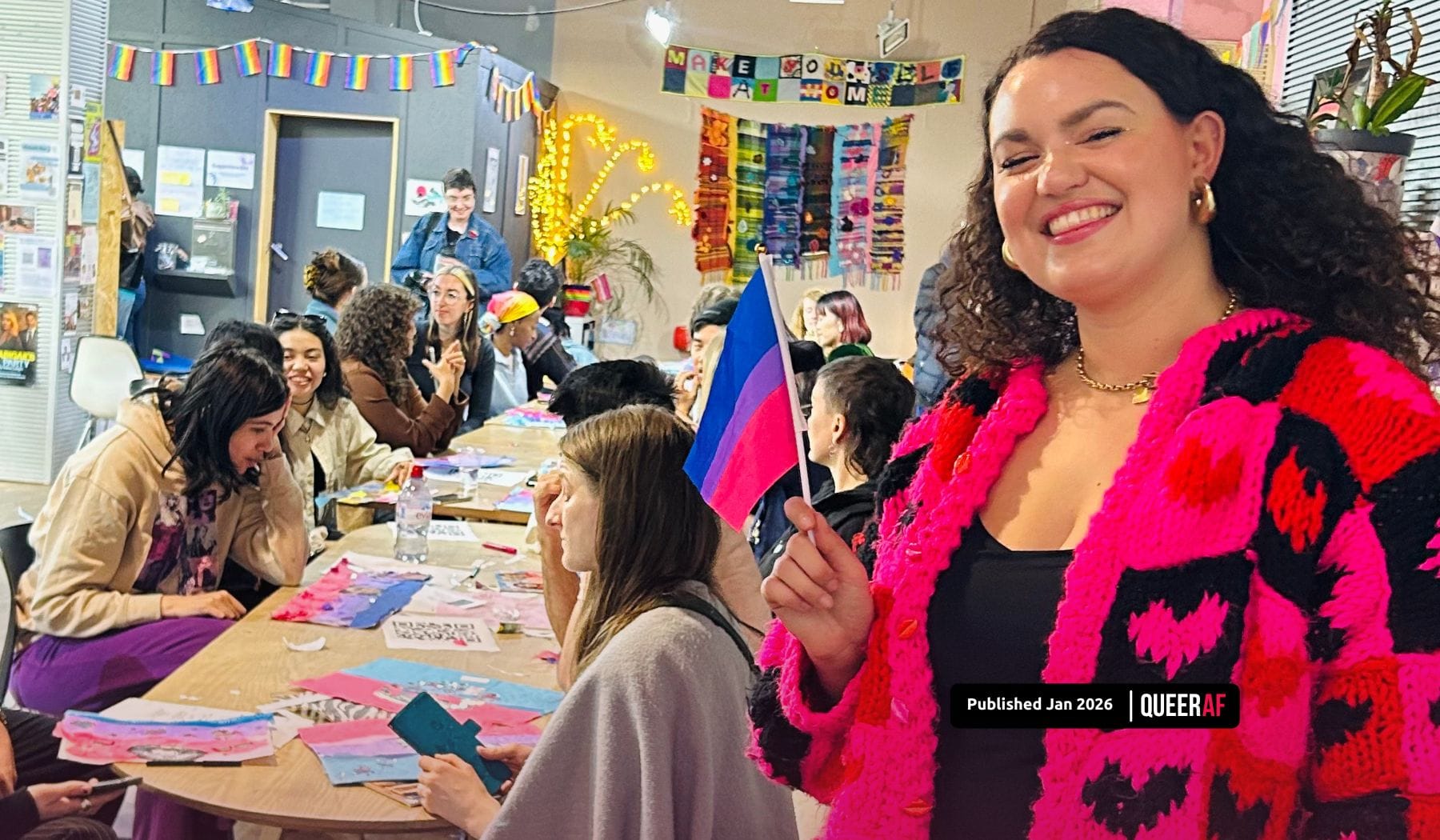
I know it’s possible because I’ve seen it — at the Bi Bitch bisexual empowerment speed friending and singles events I run. From tears to coming outs and new friendships, there is magic in discovering you’re not alone.
But we need the rest of the queer community to stand alongside us, too. It’s time the community united to end rejection. All of our authentic selves should be celebrated.
There aren’t fewer bisexual people around than before — it’s our constant invalidation which needs addressing, especially in headlines which lack nuance and perpetuate biphobic tropes. We’re not a trend, and we’re certainly not going anywhere.
Get the Queer Gaze in your inbox each week with our free weekly newsletter or pitch to write an edition for us now.
We deserve good news too.
When there is so much hate out there, it's easy to get swept up in the doom.
QueerAF doesn't do that. We sprinkle in the joy that is the lifeblood of why being LGBTQIA+ is so simply wonderful.
And in the newsletter where this was first published, there was actually a bunch of positive news to celebrate. It shows me that despite the headlines knocking us down, we're getting right back up again and using our anger to fuel our fight.
While the rest of the media cashes in on hate about us, we can focus on queer joy - because you drive us. The community. QueerAF readers - not advertisers.
Our members directly fund our content. When you sign up, you get to have your say on how your funds are used. On what content we should commission.
But we turn down advertising and sponsorships in this newsletter so we can focus on delivering on content for you, not just clicks. That's why we need you to sign up to become a QueerAF member.
You'll join hundreds of awesome queer as f**k members who ensure we can keep our unique approach to queer content happen. If you want to see the media cover more stories about the joy in our lives - please, consider a membership. We can't run our outlet without you.