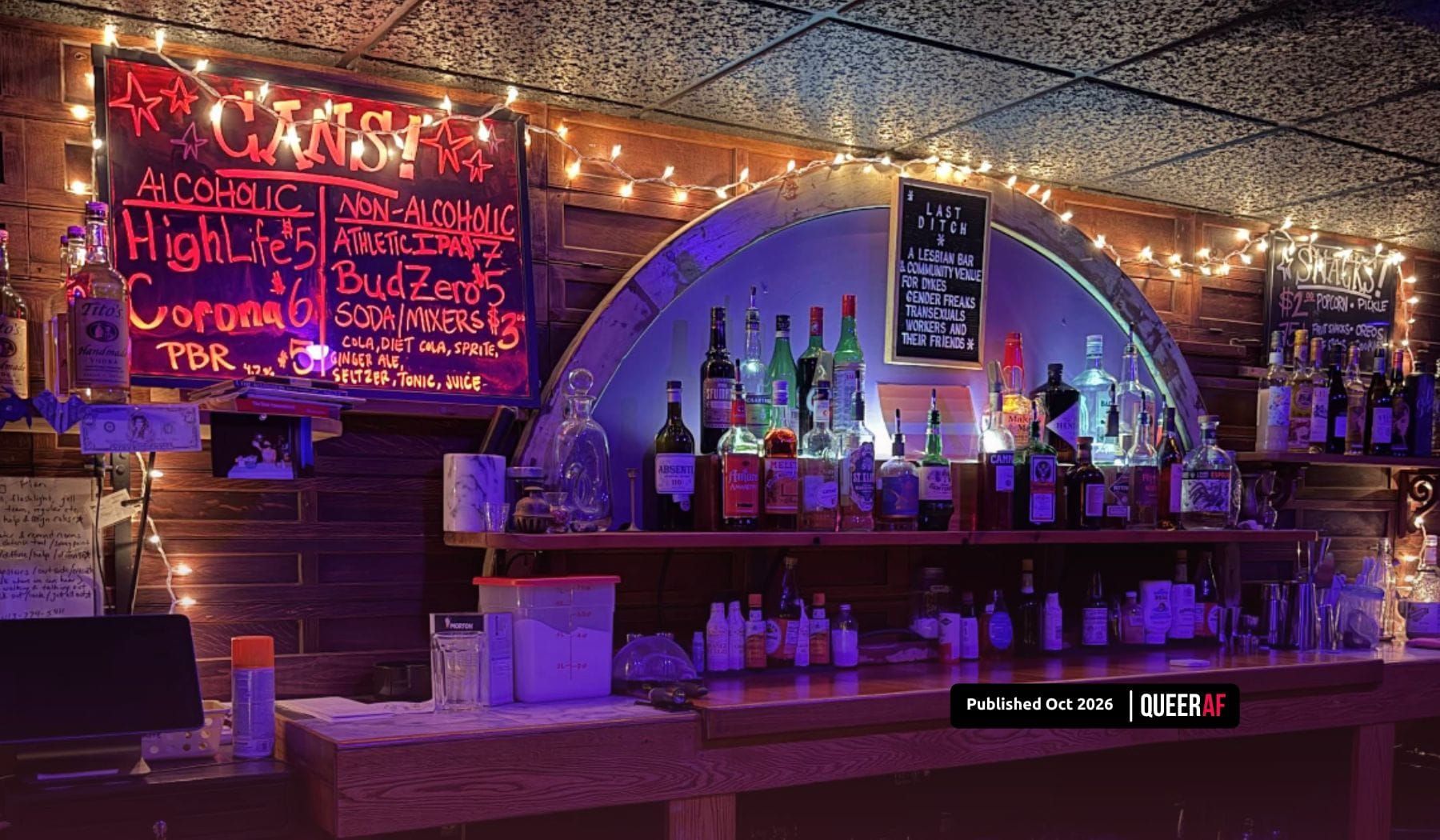


A viral Boston Globe article about a local lesbian bar known as Last Ditch in Massachusetts, which preyed on stereotypes about the queer community without sharing the nuances and depth of understanding it required to do the story justice.
Published on the 22nd of September, The Boston Globe article was titled “A Western Mass. lesbian bar required KN-95 masks. When it changed the rules, all hell broke loose.” It put a community rupture centred on a small-town lesbian bar on the global map. The controversy began after the bar, whose owner works four jobs and is struggling to repay a loan after fellow owners left the project, made mask-wearing – usually a requirement to enter the space – optional on Saturdays. Many of the responses from the local community were angry ones, expressing a feeling of betrayal.
The Globe article begins with a collage of the comments on Last Ditch’s Instagram announcement, showing how a pile-on ensued, with the journalist detailing in great volume the anger that grew.
The effect on the reader is to overwhelm and oversaturate, and does little justice to the true nuances in this local community. As a result, backlash from mainstream coverage fell hard on Last Ditch and every queer person associated with the bar – while the Boston Globe greatly profited, with a surge in subscriptions.
That profit came from selling a prejudiced and lazy queer stereotype, of an unstable and hostile community. The deeper questions of what happened in Massachusetts were left unanswered: Why did this happen? And who really are these people, outside of the characters they play in this story?
If the Globe had taken time to answer these questions, perhaps something more important about queer communities could have emerged. Something about the ways we struggle and the conflicts worth fighting over.
The article brings to light all of the issues the Covid-19 pandemic exacerbated: the struggles of economic hardship,of disability, and the ways they are multiplied in LGBTQIA+ people. Notably, the way it covered the story is also a textbook example of the ways mainstream media aren’t willing to talk about our community.
Back in 2018 I lived in a city with a big queer community and worked in a co-operative cafe. We were mostly queers, leftists, and disabled colleagues, trying to build something bigger than a business venture. Whatever we managed to achieve for the community, we fed and paid ourselves for over a decade – a huge accomplishment. Keeping a queer venue going over a long period of time, maintaining the economic values of a co-op, and creating material, tangible support for people is uncommon in cities like mine. I was proud to work there.
Over time I have seen the financial strains that choke co-operatives into a more capitalist mindset, and – as I shielded with an immunocompromised person, seeing no one for two years except with extreme caution during the pandemic – I have felt the loneliness and resentment that builds during isolation from the people you need the most.
These issues are not singular to queer people. The pandemic wreaked havoc on local venues and businesses across the UK. The number of Covid-19-related deaths in the UK is tragically high and likely under-reported due to lack of uniformity in categorising COVID deaths. The struggle to discern the right decision, to negotiate the lockdown and the need to return to public spaces, to handle conflicts that threaten suppression to be resolved – that was the tone of 2021-23.
And of course, after the lockdown ended and society returned to ‘normal ’, conversations never really opened up about what the right choice was back then, who made the calls, and what the price of them was. There has been little interest among the British public in the UK COVID inquiries.
When queer people make commitments to each other, it is because we have to. We need each other to survive. We are, often, our only family and our only net to fall back on. The economic pressure this puts on social relations is immense. Mainstream society can, perhaps, only understand it through the lens of a crisis they have lived through, like Covid-19. But their own ineptitude at resolving conflict, a responsibility largely left to police and government bodies, is obvious to me in how they react to ours.
The issues we attempt to confront, like disability and public spaces, prison abolition and non-carceral justice, breaks ground where wider society is unwilling to go. It is probably easier to laugh at us, humiliate and harass us for trying what they do not attempt than to try themselves. It certainly makes them money to expose us on right-wing and centrist media platforms.
A study last year reported that LGBTQIA+ news in the US is in crisis. The articles written about us are difficult to challenge or correct. We rely on honourable journalists to tell accurate stories.
Not long after the Globe article was published, the original organiser from Last Ditch called it ‘abysmal journalism, and a disorganised article’. In the end it had not been helpful for anyone involved. Nor has it promoted any useful conversation around disability, COVID, or the struggles of local businesses.
Instead it's an example of the boots on our necks continuing to press down harder, and making us fight, sometimes viciously, over the only options we have left. The last venues standing in a city. The little funds available. Meanwhile the mainstream media is more interested in how funny we are than in our struggles to find a way through together.
Get the Queer Gaze in your inbox each week with our free weekly newsletter or pitch to write an edition for us now.
We deserve good news too.
When there is so much hate out there, it's easy to get swept up in the doom.
QueerAF doesn't do that. We sprinkle in the joy that is the lifeblood of why being LGBTQIA+ is so simply wonderful.
And in the newsletter where this was first published, there was actually a bunch of positive news to celebrate. It shows me that despite the headlines knocking us down, we're getting right back up again and using our anger to fuel our fight.
While the rest of the media cashes in on hate about us, we can focus on queer joy - because you drive us. The community. QueerAF readers - not advertisers.
Our members directly fund our content. When you sign up, you get to have your say on how your funds are used. On what content we should commission.
But we turn down advertising and sponsorships in this newsletter so we can focus on delivering on content for you, not just clicks. That's why we need you to sign up to become a QueerAF member.
You'll join hundreds of awesome queer as f**k members who ensure we can keep our unique approach to queer content happen. If you want to see the media cover more stories about the joy in our lives - please, consider a membership. We can't run our outlet without you.