
TL;DR: NHS England has told hospitals that, due to the Supreme Court ruling and EHRC Code, trans patients should be put on wards that align with their 'biological sex', which the court determined to be their sex assigned at birth. It also sets out that it will be appropriate to segregate trans people to separate rooms, which are scarcely available, if it protects the 'dignity' of other patients.
NHS England is facing criticism for new guidance, which Trans+ rights advocates fear "may even lead to [trans patients’] deaths".
NHS England has published new guidance on same-sex accommodation in NHS hospitals. It sets out that, due to its interpretation of the 2025 Supreme Court ruling on the Equality Act and the subsequent EHRC Code of Practice, trans patients should be put on wards that align with their 'biological sex', which the court determined to be their sex assigned at birth.
The guidance emphasises that all decisions must be "clinically appropriate" and determined through individual assessment. But it gives little guidance on how to consider this. Critically, it sets out that while trans patients' priorities should be considered, so should other patients'.
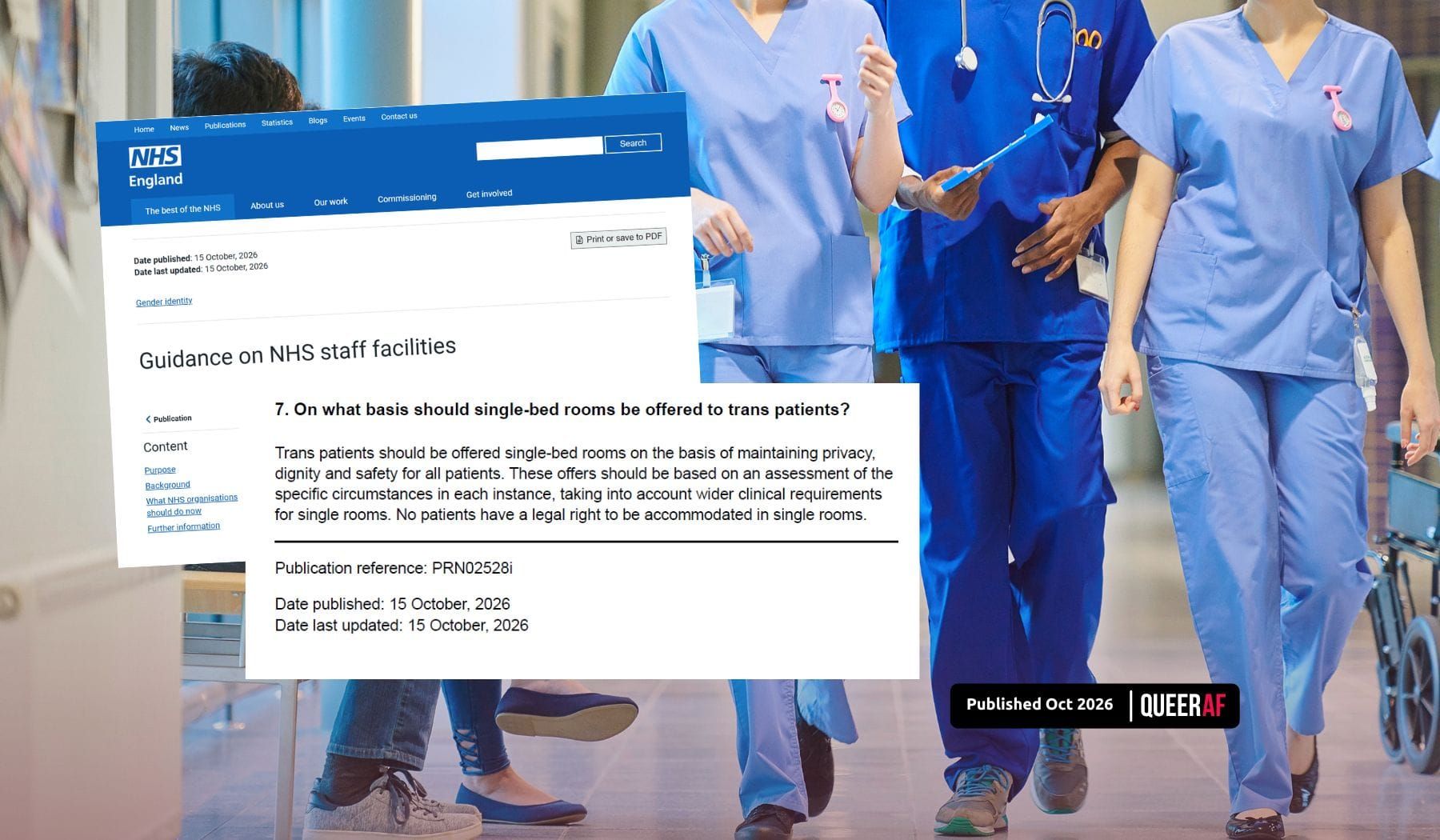
Because of the clinical risk focus throughout, it does not set out that trans patients should automatically be offered single-bed rooms. However, it does say that this should be done to maintain "privacy, dignity, and safety for all patients", and adds that this will also be based on wider needs for 'side rooms', which are usually reserved for infection control and end-of-life care - QueerAF
"Exclusion should not be the default. The priority should have been patient safety - instead, this policy will mean trans patients are left stranded in corridors without proper care," Good Law Project’s Trans Rights Lead Jess O'Thomson tells QueerAF.
"Trans patients have been treated on gendered wards for many years without complaint or incident. This new policy is not just a potential violation of trans people's human rights - in some cases, it may even lead to their deaths."
The policy comes as the NHS continues to struggle with the rising breaches of its existing mixed-sex guidance, with a rise every year since 2021. The most recent figures show that in August 2026 there were 5,520 breaches, which count as each patient being held on a mixed-sex ward. This compares with 3,853 in June 2025. - BBC
New policy for staff launched in tandem
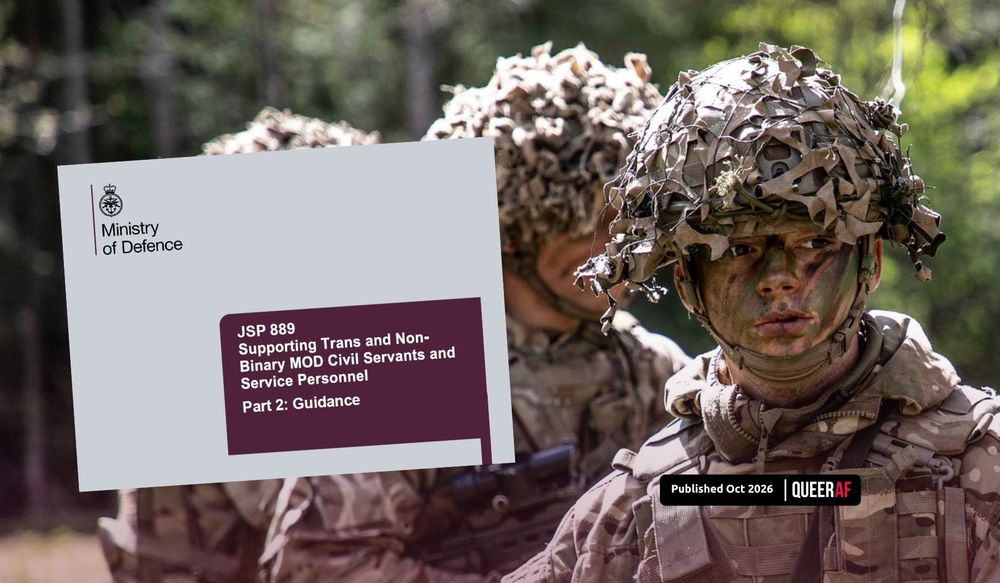
The NHS also launched new guidance on how Trans+ staff members should be treated in the wake of the Supreme Court and EHRC Code of Practice.
It set out that single-sex changing and toilet facilities on NHS properties now must be offered on the basis of 'biological sex' too. It says alternative provisions, like accessible and lockable cubicles, may need to be created for trans people.
It follows multiple cases brought by gender-critical nurses, including Sandie Peggie and the Darlington Nurses, that have pressured NHS England to change its approach.
Notably, however, in both cases the rulings were not simple anti-Trans victories. In the case of the Darlington Nurses, the employment tribunal exonerated a trans woman who faced accusations of harassment and discrimination for using a women's changing room at the County Durham and Darlington NHS Trust. But it did so while concluding that the Trust had harassed the group of eight nurses by allowing Trans+ people to use the changing rooms and bathroom of their choice.
In Sandie Peggie's case, which she is now preparing for another tranche of action about – this time against her union – ruled that the Supreme Court’s ruling on the Equality Act does not require Trans+ people to be segregated from single sex bathrooms and changing areas. Both cases have now been superseded by the EHRC Code of Practice, which aligned with the gender-critical arguments in these cases.
Analysis: Fears Trans+ patients won't seek care
Speaking to Trans+ organisations in the wake of the publication of this guidance yesterday, as well as the clear sense of yet another "unworkable" policy, many expressed concerns that Trans+ people simply would not get access to care because of these additional requirements. That’s why some say it will lead to deaths.
More broadly, this decision will further affirm a growing sentiment peddled by media, politicians and anti-trans actors that it is fair game to challenge people's gender for ever-narrowing ideals of what men and women should look like. The hospital ward, which should be about care and recovery for people struggling with their health and disabilities, will instead become another playground where culture wars will play out.
As a disabled immunocompromised person who's spent at least three years of my life in NHS beds, I've seen first-hand how few resources NHS staff have, a situation that's got increasingly worse in the 17 years I’ve been accessing it for my condition. I know that there are not enough private rooms for the most clinically vulnerable, let alone anyone else. The idea that Trans+ people can be put in side rooms is a fallacy; I could rarely get one despite my clinical needs.
On top of this, whose job is it to navigate claims that people are being placed on the wrong wards? As a statement by TransActual and Trans+ Solidarity Alliance set out, "Doctors and nurses need to be able to prioritise looking after the person in front of them, not juggling scarce side rooms and writing breach reports to keep trans people safe."
"This guidance will not survive contact with reality in resource-strapped hospitals and will create unworkable operational challenges. The government failing to get a grip of this legal mess is sadly putting politics over patient care.

The implementation of the EHRC code is a stark and scary moment.
Segregation has already begun - with signs appearing across even spaces that might feel like progressive bastions - pointing Trans+ people to gender nuetral bathrooms.
Despite claims 'sex questioning' will be rare, forms of gender policing have been on the rise since anti-trans movements gained a foothold in the public sphere.
We're aware of all kinds of attempts to undermine Trans+ rights taking place at businesses, in government and in civil society. But we simply don't have the resources to investigate them all.
To deliver high-quality journalism and hold power to account, we need your help.
It's clear there are dark and powerful forces behind those who are seeking to take away our rights.
QueerAF has a proven track record of bringing them into the light, so you can use that information to fight back.
Help us deliver even more queer accountability journalism with a QueerAF membership. They start at just £4 a month and every membership helps us invest in Trans+ journalists, in the fight back for all of us.