
TL;DR: The NHS Wales Joint Commissioning Committee has apologised for the "distress" caused by a decision to withdraw care from hundreds of Trans+ adults, but admitted its "urgent review" had still not begun nearly a month after care was 'paused'. It has however set out the review will go, patient by patient, and where "it is appropriate", patients will see their care resume.
The NHS Wales Joint Commissioning Committee (NWJCC) has apologised for the uncertainty and worry it has caused by pausing every gender-affirming surgery for patients of the Welsh Gender Service, as QueerAF revealed with What The Trans!? a month ago.
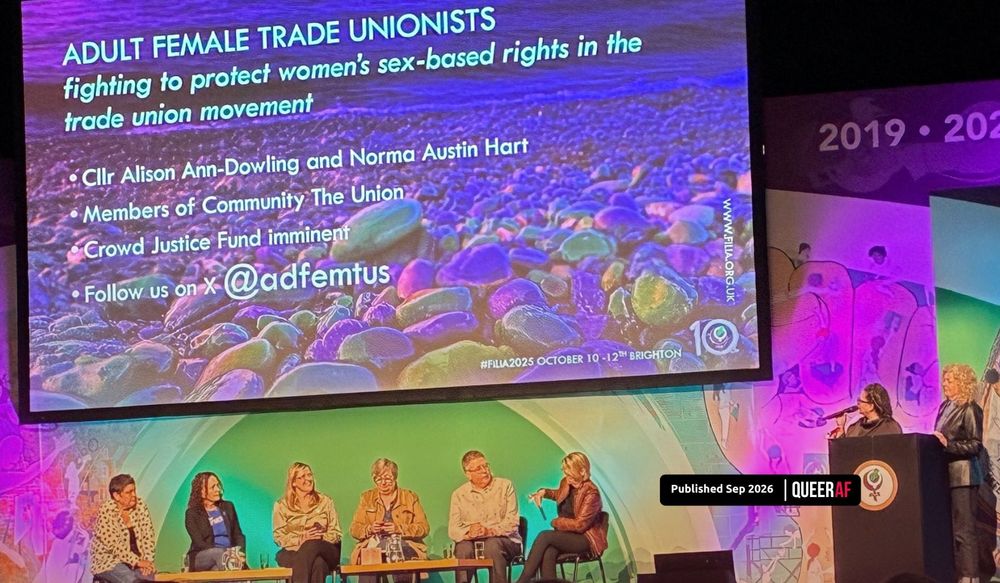
In a statement titled 'progress update', the service said the pause was introduced "as a precautionary measure, on clinical advice, following concerns identified through routine quality, safety and assurance processes". The pause followed a blog by gender-critical journalist Nick Wallis and complaints made by a Conservative member of the Welsh Parliament.
The NWJCC said this change "remains a pause and is not a permanent change to the service." The review, which it has called "urgent", has still not begun, but the "final preparations are now being made".
It set out that a number of "experienced gender clinicians" had been appointed, alongside consultation with Cardiff and Vale University Health Board (CAVUHB) and surgical providers in NHS England.
The service said the review will begin with patients whose surgery was due to take place between August and December 2026, and "no decisions about individual patient care have been made at this stage."
Patients will be reviewed one by one, in the order they were set to receive treatment, and "where it is appropriate for a patient to proceed, arrangements will be made for their surgery to resume as soon as possible." Those due to have surgeries in 2027 will have their cases reviewed as part of the process too.
The union Equity has become the latest to write to the Welsh Government to seek clarity on the pause. Simon Curtis, Equity National Official for Wales, said the publication of a timetable for reviewing people whose surgery has been paused was "a welcome step" but that "a timetable for the review is not yet the same as a clear route back to care."
Meanwhile, a post on the Welsh Parliament's petition site, which mirrors Westminster's site's mechanics, has reached 17,000 people calling for the immediate "unfreeze" of gender-affirming surgeries.
Cwiar Cymru, which describes itself as an "independent LGBTI+ rights watchdog" for Wales, has called for people to write directly to Juliet Brown, NHS Wales Chief Commissioner, to share their concerns about the pause. Brown has only been in the role for four months, and has a background of working in North London NHS commissioning, which oversees the Tavistock Centre, where a children's clinic was shuttered after anti-trans legal action.
Analysis: Climate of fear about gender-affirming care moves onto adults
The strong reaction by the NHS to “concerns” about an effective healthcare model one month ago was a significant shift, applying widely held beliefs and policies limiting children's access to gender affirming care to adults.
QueerAF's lead investigative journalist, Ludovic Parsons, described the shift as sitting "neatly within the current climate of fear about trans existence", and as another example of the power of relentless right-wing media attacks on Trans+ healthcare – though this is ordinarily directed at healthcare for Trans+ children and young people.
The pause comes almost a year after a QueerAF and What The Trans?! joint investigation, the Gender Clinic Files, revealed that the national average wait time for a first appointment at an NHS gender clinic in the UK is a staggering 25 years. In Scotland, the worst place in the UK to try to access Trans+ healthcare, the wait time for an NHS gender clinic appointment was 224 years. But in Wales, we found that the wait time was just two years.
The Welsh Gender Service opened in 2019, replacing a system under which Welsh trans people had to travel to English gender clinics for healthcare. The WGS operates a slightly different model that gets patients healthcare more quickly – as seen in the drastically shorter wait time for appointments. The Welsh Gender Service also doesn’t suffer from the vast backlogs that many English and Scottish gender clinics are weighed down by after decades of inefficient healthcare provision too.
What happens next could set a critical precedent for Trans+ adults across the UK. But the reasoning behind it still remains unclear, a month on from a pause that withdrew care from hundreds of adults, some of whom were waiting in hospital for their surgeries.

This bears repeating.
Our investigation into the UK's gender clinic system was backed by dozens of FOIs, excruciatingly fact-checked, published while abiding by our strict independent press regulation rules about accuracy and seen by more than a million of you - and that's before we count the reach of the many outlets that carried the story.
The investigation provided a far more accurate picture of the system than the then health secretary, Wes Streeting, had.
It was referenced in Parliament, in the Scottish election campaign and by international figures.
No change was made, and neither the Government nor the NHS responded.
One blog, self-published by a gender-critical freelance journalist - cited by one Tory member of the Senedd in Wales - has led to the withdrawal of care for potentially hundreds of Trans+ adults.
It speaks volumes of how much the systems are stacked against our community. That's why we need a long term plan to change the media, and the country.
We are here every week while that work continues, filling the gap left by the mainstream media - reporting on LGBTQIA+ news with justice. But we're more than just a publisher.
Our core mission is to stop misinformation and the popularising of anti-LGBTQIA+ agendas at their most prominent source - the media. We're doing that by training up a new generation of queer creatives with journalism and strategic communication tools - so they can work in the media, to change it.
Help us fight back against the powerful and well-funded anti-trans movement by tooling up Trans+ journalists - to tackle hate at its source with a QueerAF membership, from just £4 a month.