

TL;DR: New prescriptions of hormones for use as gender affirming care have been 'paused' for 16- and 17-year-olds, amid a 90-day consultation following a review. An impact report leaked to the Daily Mail also revealed that NHS England was already reviewing adult access to this form of Trans+ healthcare. By Jamie Wareham, with analysis from Ludovic Parsons.
NHS England has begun a review into access to hormones being used by Trans+ adults for gender affirming care, whilst also 'pausing' new prescriptions for 16 and 17-year-olds who wish to access this care.
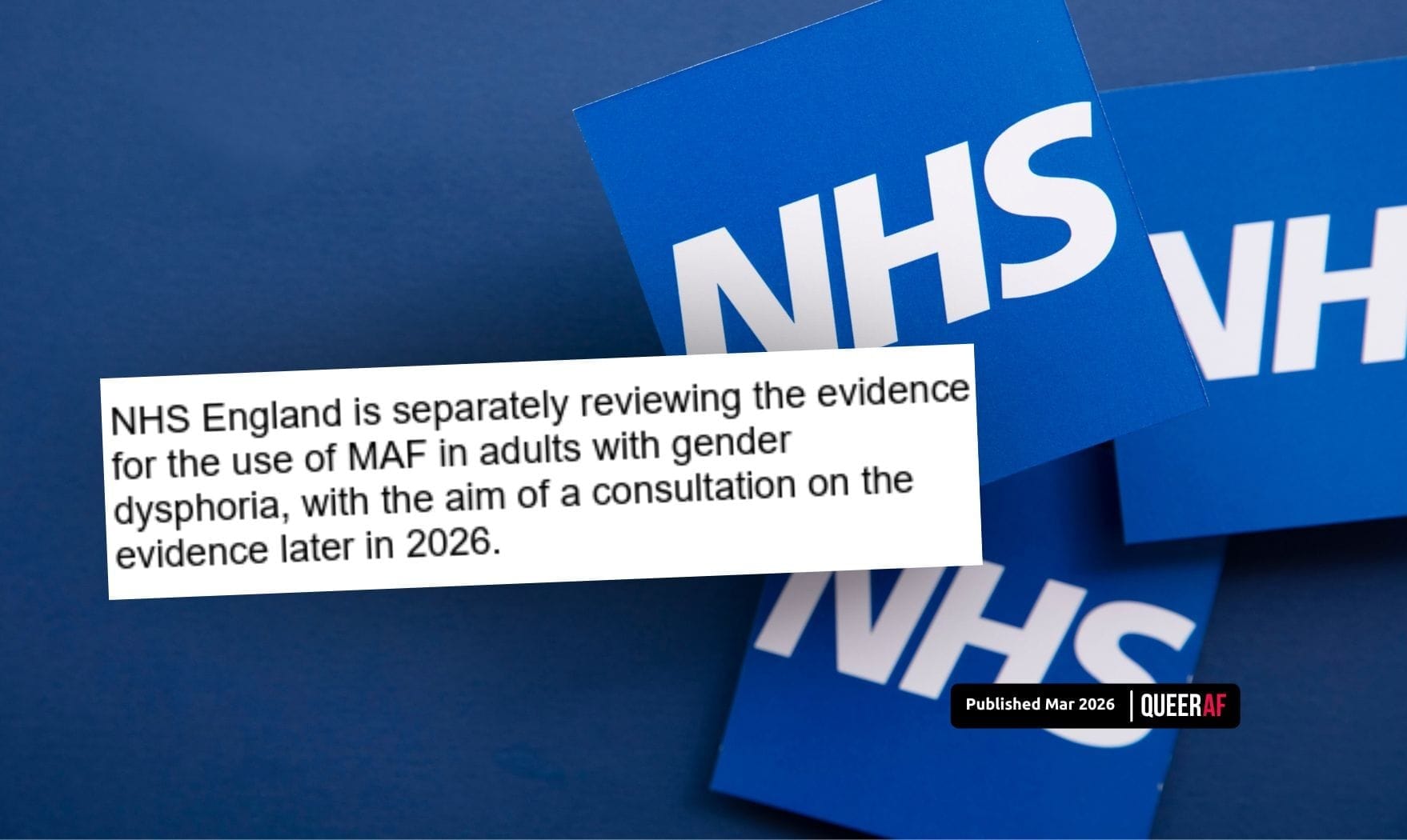
New prescriptions of hormones have been paused for 16- and 17-year-olds while NHS England (NHSE) runs a 90-day consultation following a review. In the Equality and Health Inequalities Impact Assessment of this announcement, which was leaked to the Mail on Sunday before being publicly announced on Monday, it was also revealed that NHSE are reviewing Trans+ adult access to cross-sex hormones.
The review which led NHSE to this conclusion excluded 97% of studies looking at the use of hormones for trans youth, by creating narrow criteria for them to count as 'high quality' enough to be included - Erin In The Morning
These numbers reflect the 98% of studies which were excluded from the now widely discredited 2024 Cass Report, which recommended restricting access to gender affirming healthcare for Trans+ people under the age of 25. The new restriction is in line with one of the Report’s recommendations - QueerAF
16- and 17-year-olds who are already being prescribed hormones will also now have their prescription reviewed by clinicians.
TransActual policy lead Tammy Hymas said: “Banning new prescriptions of gender-affirming hormones for 16- and 17-year-olds is a profound attack on young people’s bodily autonomy, with trans people yet again cruelly singled out by this government” - The Guardian
There are concerns among LGBTQIA+ organisations that the consultation will end in an NHS ban on hormones for under 18s. Anti-trans groups have already seized the opportunity and their connections to right-wing media to call for the review to also include a criminal ban on private prescriptions of hormones, as there now is for puberty blockers.
As with puberty blockers, cross-sex hormones will not be banned for cisgender people's use. Cis women use testosterone in hormone therapy to combat symptoms like reduced libido, difficulty orgasming, and reduced interest in sex. Though it’s now more rare, cis men can also be given estrogen in advanced prostate cancer treatment. These uses will not be prevented, or even part of the scope of the review.
The impact assessment of this announcement set out that a review is already under way for the use of hormones in all Trans+ adults. There is very little detail as to what this means, but unlike in studies of young people which are limited in number, NHS Directors have told TransActual that the evidence base will be "stronger for adults," indicating a ban may be harder to justify.
Analysis by Ludovic Parsons: The moment we've feared is getting close
Years ago, my fear that my NHS prescription for gender-affirming hormones would be taken away seemed largely irrational. Sure, the arms of the UK state appeared to be increasingly influenced by 'gender critical' ideology, but the NHS was a healthcare service. Healthcare is about putting patients first, not politics.
But what this week's announcement shows is that, whatever good intentions people working within NHS England may have towards Trans+ people's healthcare, they are being overruled by politicians. Pausing healthcare based on evidence that's been manufactured to suit an agenda is politics.
It appears increasingly likely that a ban on NHS hormone prescriptions for Trans people could be getting close. This alone will not stop Trans+ adults from taking hormones, but criminalising hormones would. Just like criminalising abortion and recreational drugs, it would put those who continue to take them at considerable risk.
In the face of this news, finding and supporting local Trans+ mutual aid and harm reduction groups is going to become an important action LGBTQIA+ people and allies can take at both a local and national level.
Losing voters left and right at home, pandering to Donald Trump on the global stage, entangled with child rapists and their friends, Labour's distraction strategy seems to be straight from a right-wing playbook: bash migrants, disabled people and Trans+ rights.
And what do we do when our rights are under attack? We fight back.
 Ludovic Parsons

We don't give up on a story easily
The National Child Mortality Database beat us around the bush regarding access to worrying and critical statistics about Trans+ youth suicides for the best part of a year now. But we didn't give up.
Despite growing pressure to release its analysis and having made statements that contained misdirections issued to us, it refused to release the data.
Thanks to our lead investigative journalist, we now have a much clearer understanding of what they know.
Previously, we knew they had data for four years, in which they said suicides of Trans+ young people "comprised very low numbers". Ludovic Parsons' investigation shows they had far more information than even we knew about.
What this story also shows us is that it takes dedicated, complex and nuanced work from a Trans+ journalist to get information to you - so you can use it to fight back.
We're a queer media outlet like no other.
We deserve better, and at QueerAF, we’re not only modelling the change we want to see, but we’re also working with the media so it better represents us.