
Every year, we review our work as an independent, regulated LGBTQIA+ publisher. Now you can too:
Trust in mainstream media is at an all-time low. Short-term ad-driven revenue models are failing the LGBTQIA+ community.
The diversity of those who write our stories has barely changed. A fundamentally broken industry constantly misrepresents us.
That's why QueerAF is a platform where creators, journalists and producers can get paid and commissioned directly by the QueerAF community. We're also the UK's only press-regulated LGBTQIA+ publisher - because we're not afraid of accountability.
Usually, only editors get to see data like this but we're sharing it with you - because our readers are our most important editors:
The topline is:
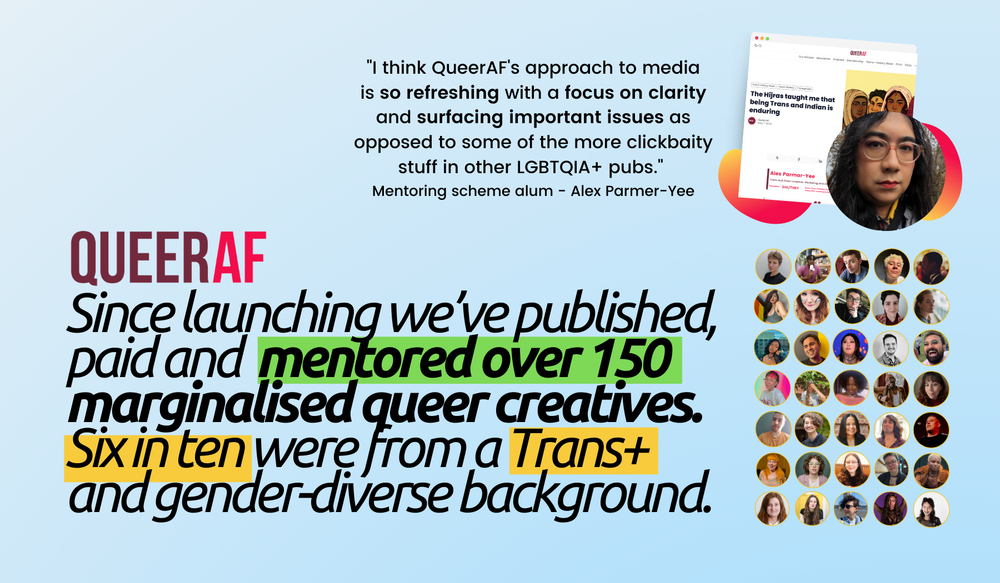
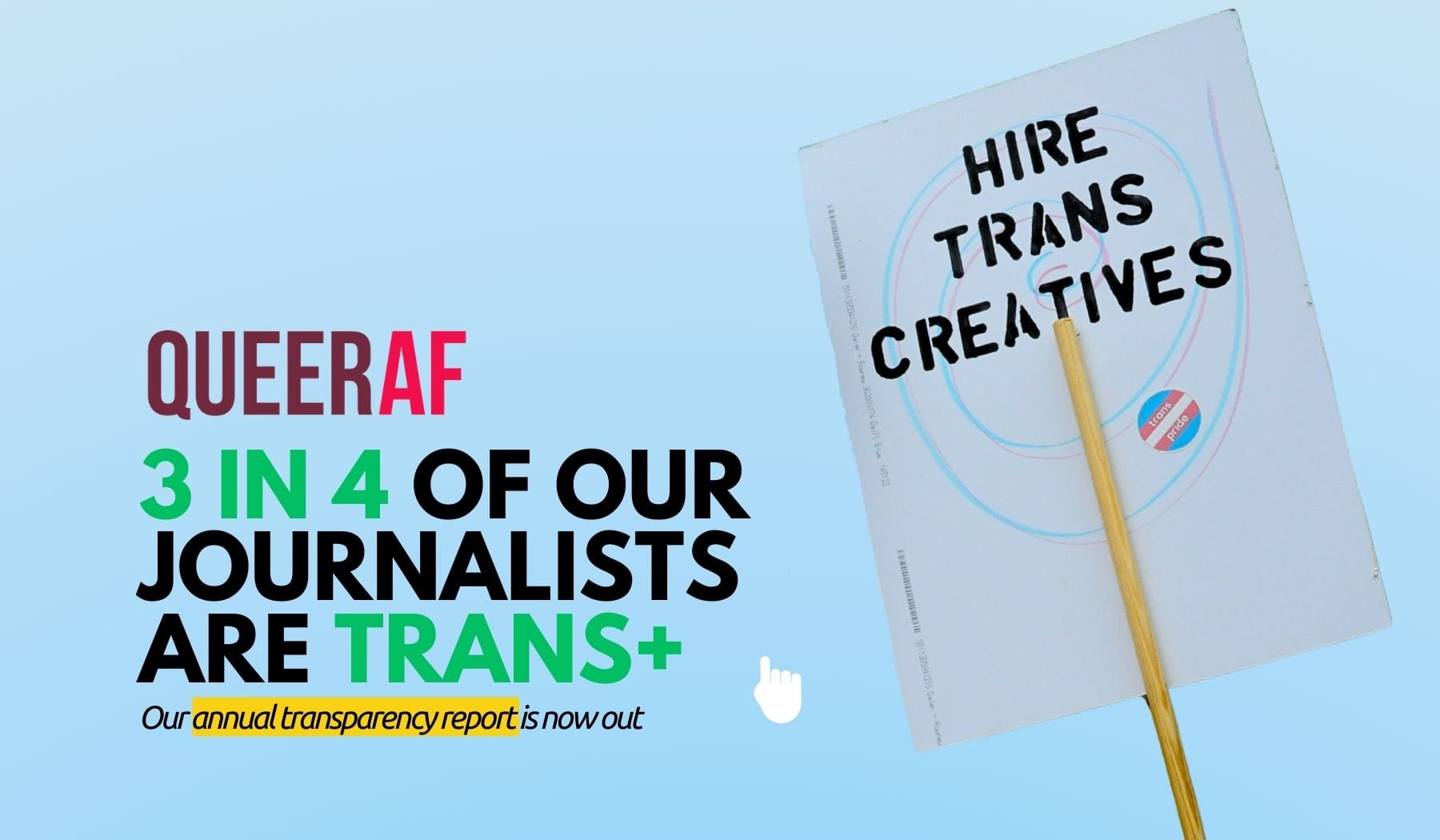
- Three-quarters of our writers are from a Trans+ background - that's an increase since last year.
- A quarter of our writers are from a racialised community - that's nearly 50% more than the proportion in the entire UK employed workforce.
- Four in ten of our writers are from a low-income background - which is five times higher than the national media and double last year's numbers.
But don't just take our word for it; scroll down to see how we've done.
We've released this data as part of our annual LGBT+ History Month fundraiser. Although memberships are always the best way to support us – if you think our approach to creating media with queer folk from marginalised backgrounds rocks, please:
Donate to support QueerAF journalism
Sexual and romantic orientations
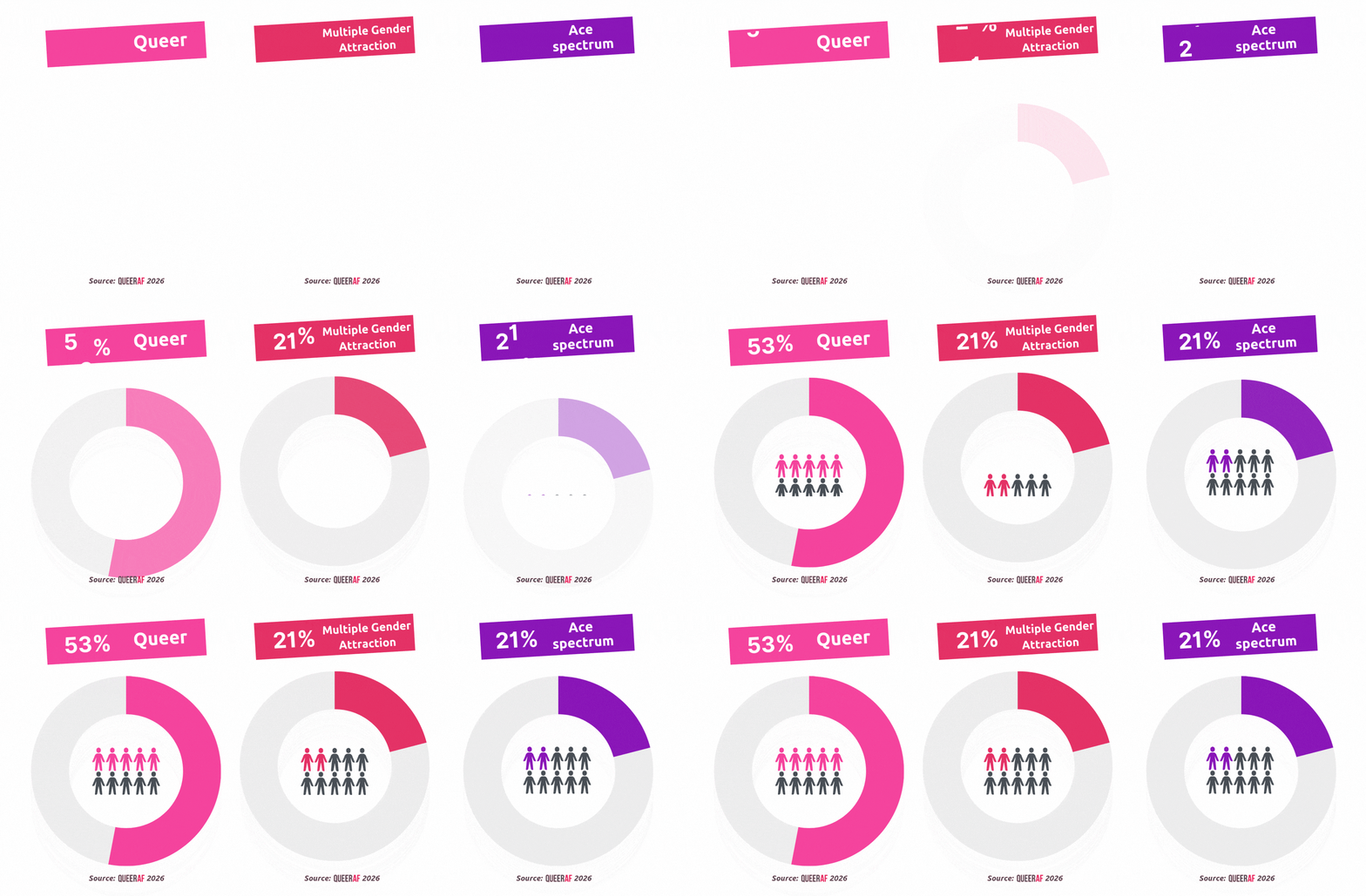
Two in ten of our writers (21%) identified as attracted to multiple genders (Bi+), whether because they were bisexual, pansexual or another M-spec identity.
Two in ten (21%) said they fell within the asexual spectrum, which includes demisexual and demi-romantic orientations too. This community is vastly underrepresented within the media.

By label and by nature:
53% are QueerAF
Gender identity
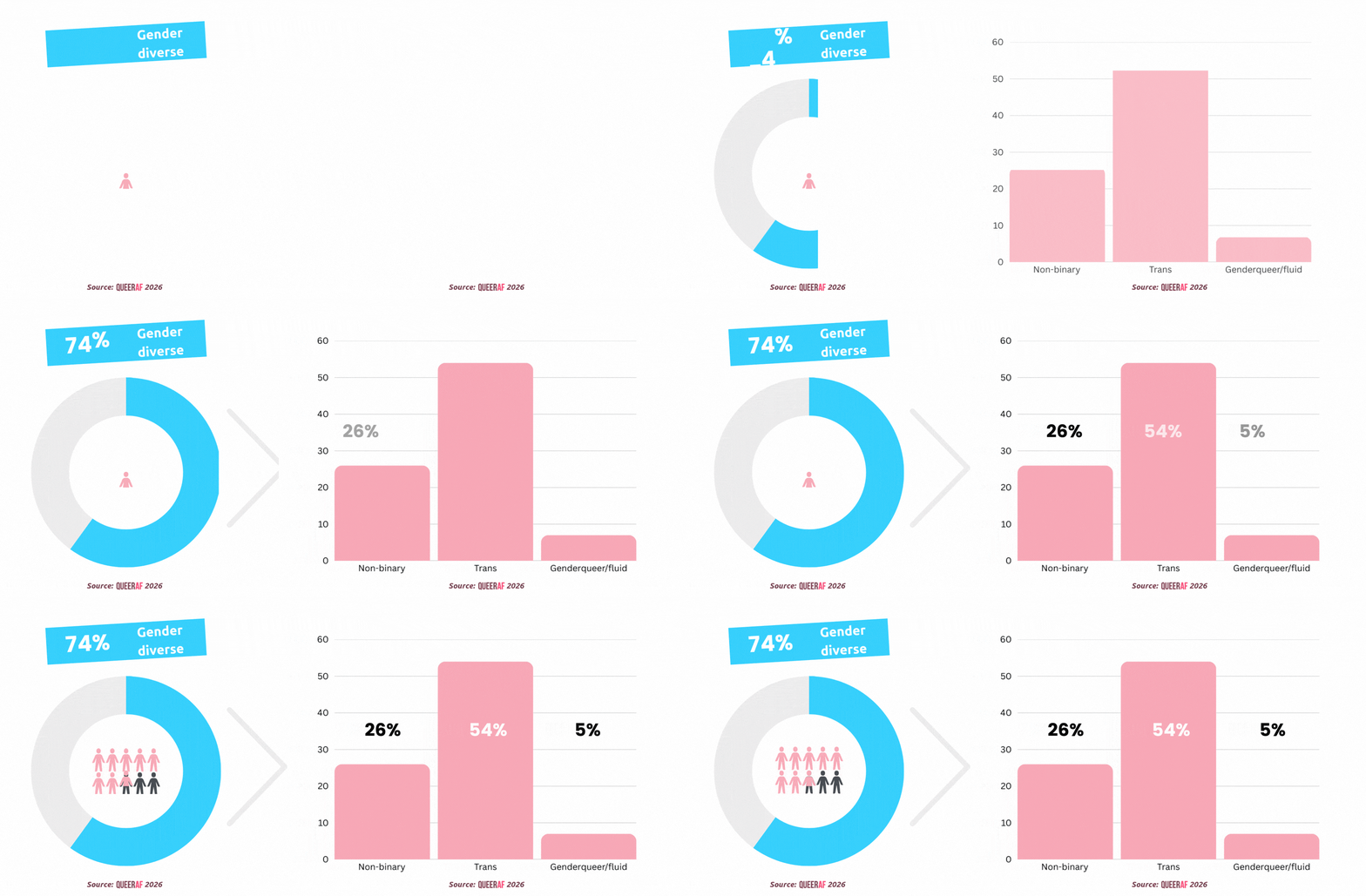
A large majority of our contributors are gender diverse, in fact - three quarters (74%) were. That's the third year of this increase from already high proportions.
It reflects the nature of the news agenda over the last year, where the Trans+ community have been on the front line for the whole LGBTQIA+ community's rights which are under attack. We've ensured during critical news, we've worked with Trans+ journalists to deliver the coverage.
Many use or identify with multiple gender identities or labels, especially those who are non-binary. This reflects the fluidity of gender.

What she/he/they said:
Our writers pronouns
Just over half (54%) of our contributors in the last year identify as transgender, a quarter (26%) as non-binary and 5% as genderqueer, genderfluid or agender.
Of our cisgender writers, 16% were women, and 7% were men.
Marginalised backgrounds
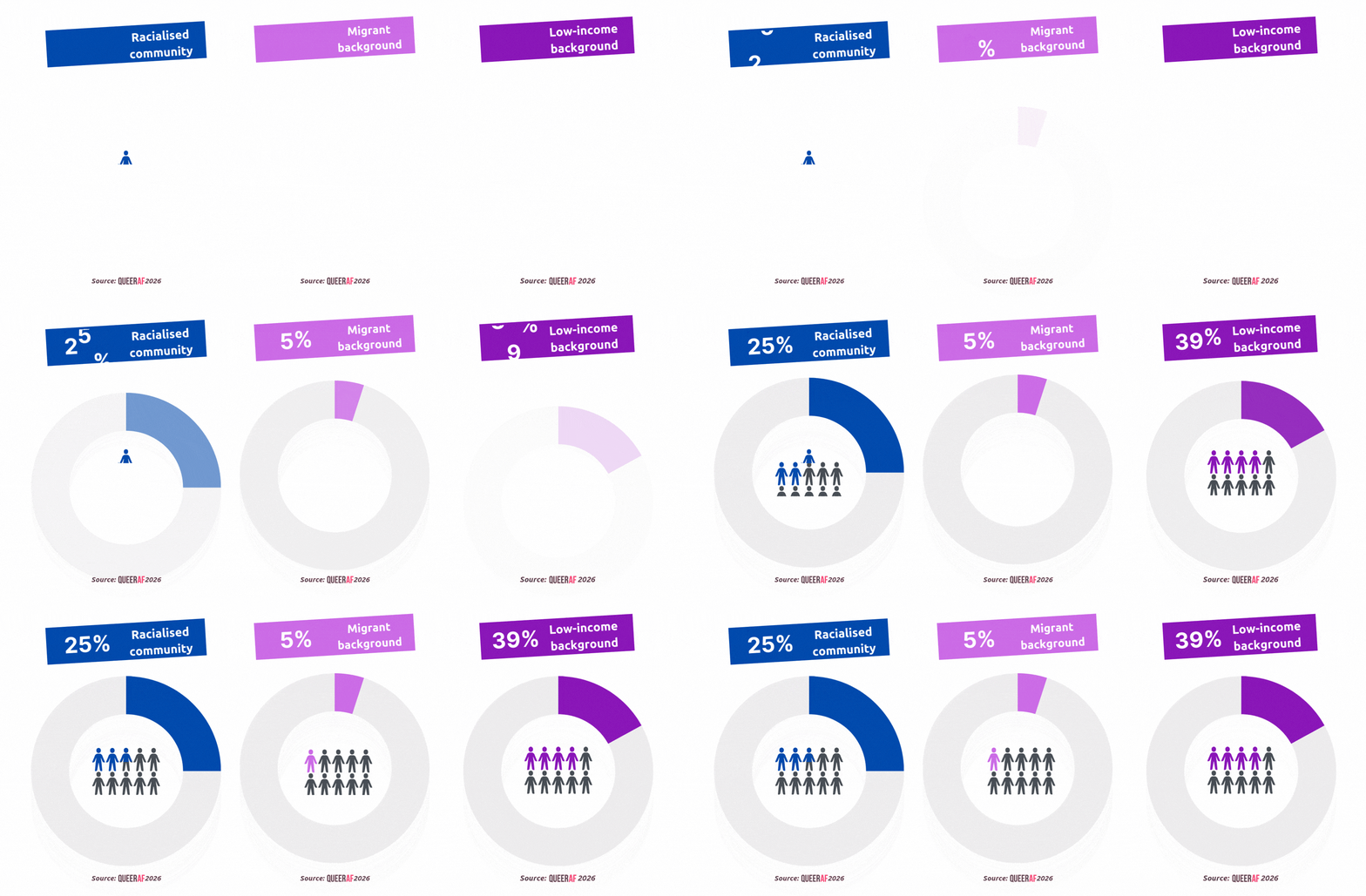
The media needs to build trust in all areas of the LGBTQIA+ community. But racialised communities have been hit hardest by the worst traits of the UK press. Of our contibutors 5% are from Asian backgrounds, 2% Arab World, 2% Latin, and 12% Black.
As an independent publisher, we recognise we have work to do to build and earn that trust. We're proud that 25% of our writers come from a racialised community; that's 79% higher the UK press average of 14%.
As we strive to set the model for the rest of the media, and our resources to invest in more areas of the community increase, we're excited to work even more with marginalised LGBTQIA+ communities
NCTJ Diversity in Journalism's annual report continues to find that working-class people were heavily unrepresented in the news industry. It's because journalism relies heavily on graduates and university routes. Our schemes, which welcome novice writers with no exerpertise aim to help others who don't use these routes.
We're pleased to say in the last year we've doubled our work with people from a low-income background from two in ten to four in ten (38%). That's five times better than the national media's 7%. Meanwhile 5% told us they are from a migrant background.
Disabilities
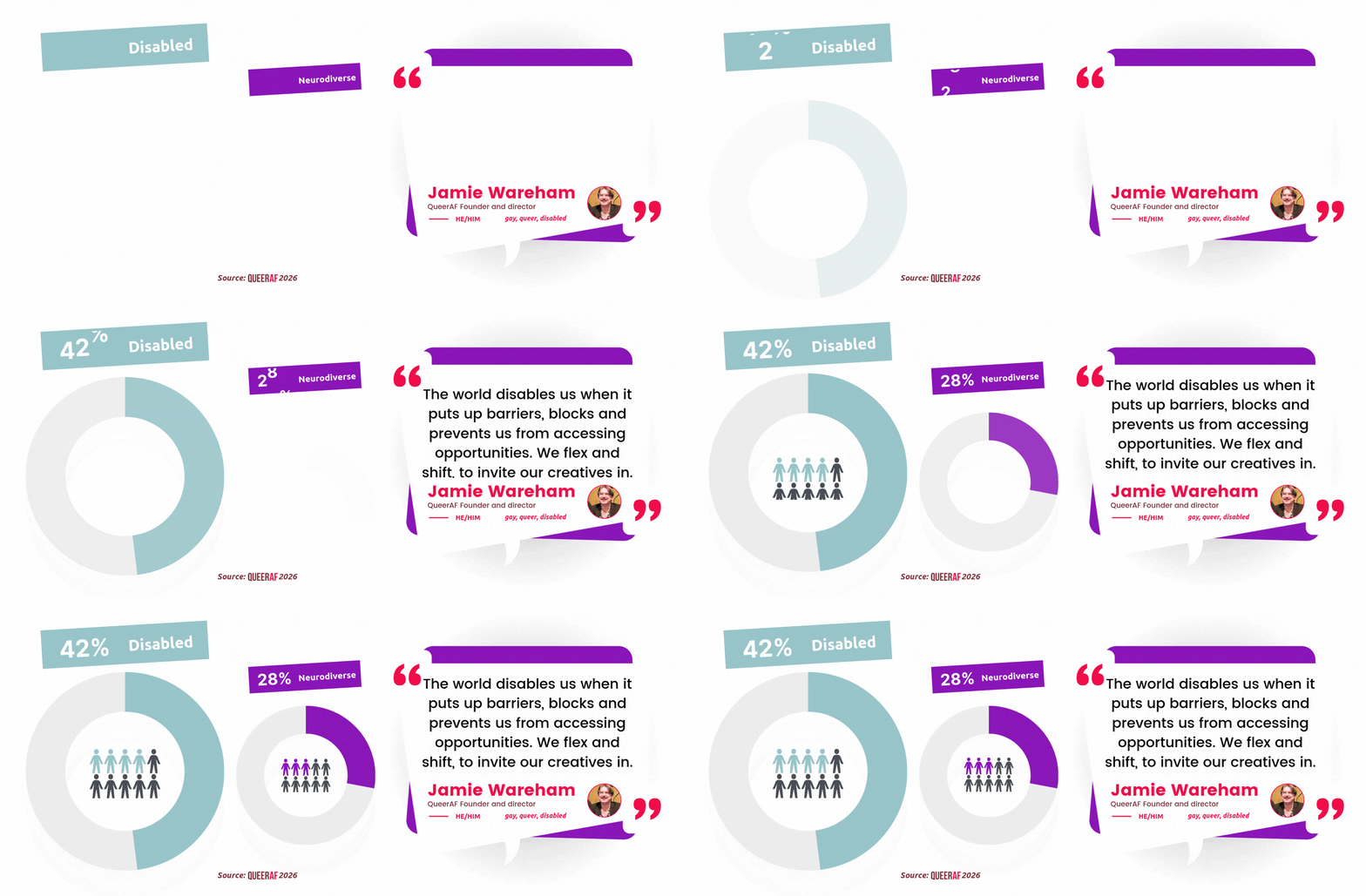
NCTJ's Diversity in Journalism 2025 report found that in UK newsrooms, 17% of journalists have a disability (lower than the UK average workplace of 20%).
At QueerAF we double that number. Four in ten (42%) of our contributors are disabled, have a chronic illness or are neurodivergent.
Folks with neurodiversity are often locked out of opportunities because workplaces don't understand their needs. It's why we work hard to design our schemes and communication approach, so they work for contributors - not just us.
What about the cash?
How we spend your money
We're funded by people, not adverts. It's so we can make content that counts - for the community, not clicks.
Our members set the agenda and tell us what to create. We've created an 'open newsroom' culture to tell the best version of the story, not simply the fastest.
So it's only right we tell you how we spent your money too.

You fund QueerAF:
Our funds go to queer creatives
Our next-largest costs were business essentials, including rent, travel, and hardware. IT software and subscriptions are also a big cost. Without these, you wouldn't be able to interact with us, and we used the non-profit Ghost, to host and run our newsletter, plus tools like Zapier, Typeform, MailerLite.
After this were tax and accountancy fees, which increased from previous years following last year's budget that increased taxes on small businesses like us. Like other digital businesses, we also lose around 3% of our income to card payment fees.
Just over half of our funding comes from memberships, which is the most powerful way to support us, as it helps us plan ahead. A quarter comes from production and mentoring services for partners like Trans+ History Week and Inclusive Journalism Cymru. The rest comes from crowdfunding, donations, syndication and editorial partnerships outside our owned platforms.

You are our most important editor
The unique approach we've set out in this year in review transparency report shows just how important it is that you're in charge of what we make. It sits alongside our Impact Report, which details how we've reinvested in our mission and the LGBTQIA+ community.
We've delivered these commissions based on what matters to you - our members and readers, not advertisers or other outside pressures.
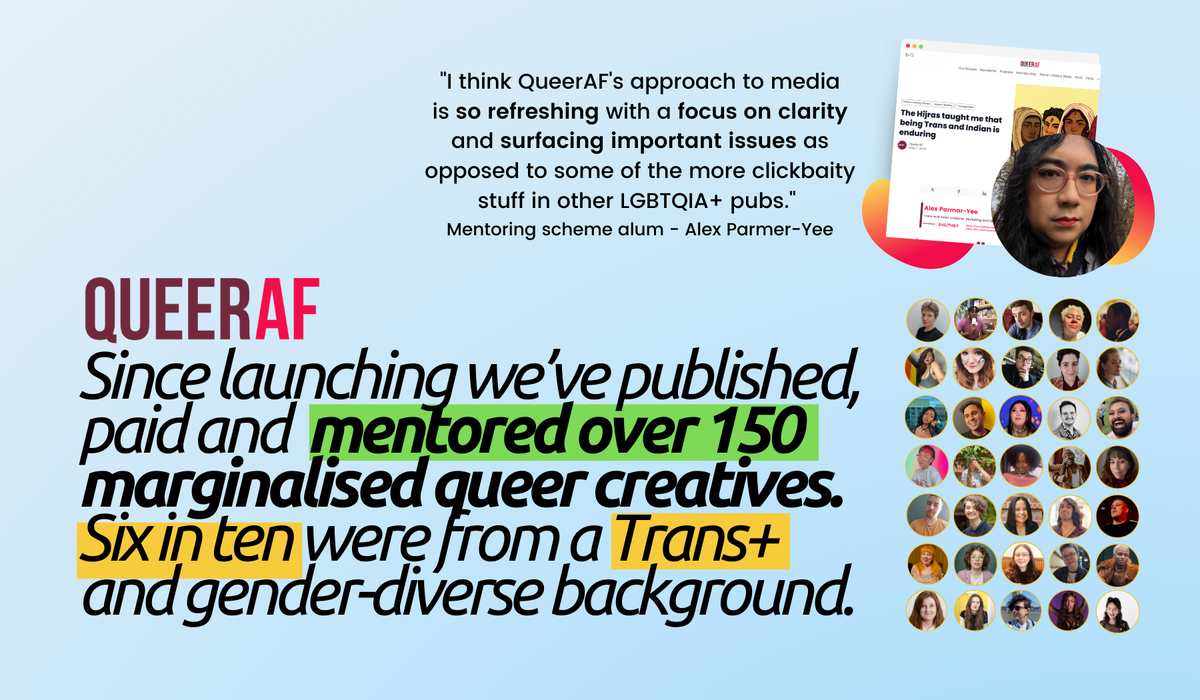
We do all this alongside supporting queer creatives with their career, portfolio and a joint mission to change the media.
Help us improve access to LGBTQIA+ journalism, expose the anti-trans machine, uncover Trans+ healthcare inequalities and deliver queer joy and activism digests – so we can all fight back
 QueerAF