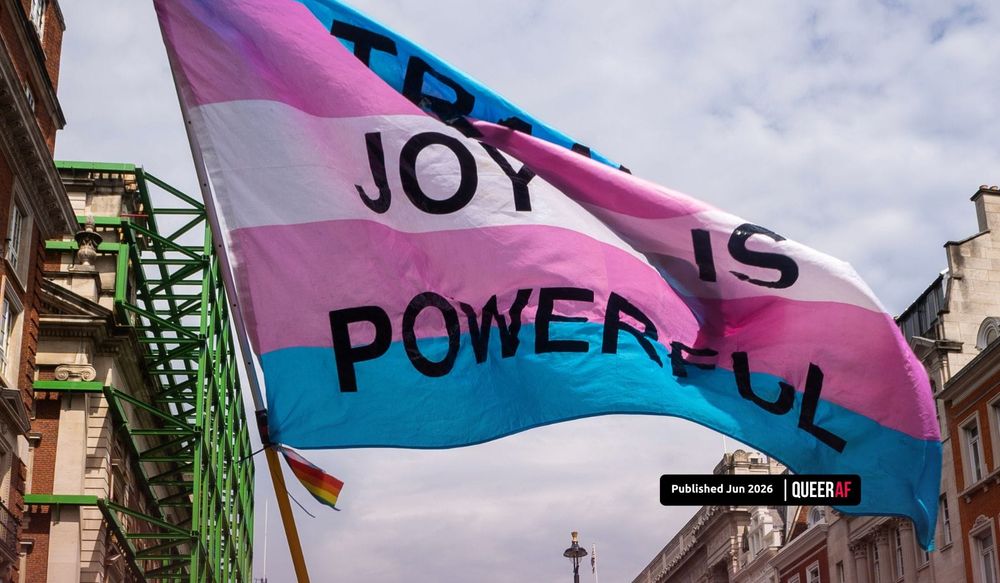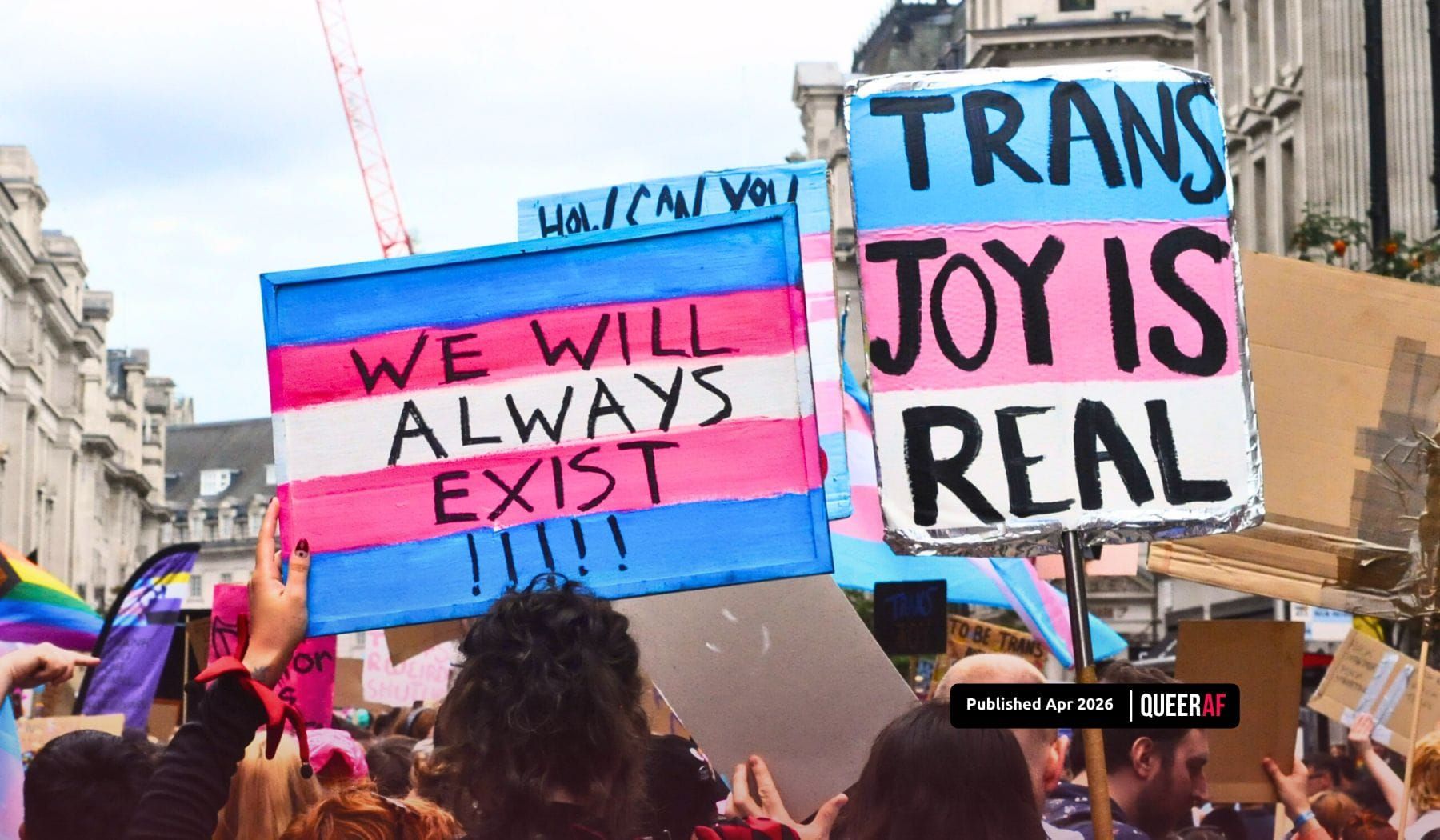


The last year has been horrendous - you don’t need me to tell you that, or go over the individual beats. But 12 months on from the infamous Supreme Court ruling on the Equality Act, we’ve also seen a blossoming of resistance, solidarity, and renewed focus on Trans+ rights and inclusion emerge. The Trans+ community and our allies have come together like never before, with a catalogue of historic hopeful moments.
In June, over 900 people lobbied their MP in parliament as part of the largest LGBTQIA+ mass lobby since Section 28, with Trans+ and cis constituents alike calling for urgent support of the Trans+ community by their representatives.
In July, over 100,000 people came together for London Trans+ Pride, the highest turnout in history. In August, Sam Nicoresti became the first trans+ person to win the Best Comedy Show at the Edinburgh Fringe, whilst the BBC and ITV hosted popular shows by trans+ writers and performers in How It Feels For A Girl and Transaction, showing that audiences want quality representation of trans+ people and their stories.
In October, the Good Law Project, originally founded to hold Theresa May accountable in parliament on Brexit negotiations, won a landmark case, allowing a trans man looking to conceive to obtain his gender recognition certificate. In March, Wembley was filled with people from across the UK for the indoor festival Transmission, cis and trans performers and attendees all there to celebrate and stand together for trans+ joy and inclusion.
That’s just five quick examples. As a community, I’m confident we could list hundreds. And they all demonstrate one clear thing: there is a broad coalition of support willing to show up for the UK Trans+ community.
Yet so much of this progress has been ignored by large parts of the mainstream media – not a surprise to anyone who’s been paying attention to the shift in journalistic standards towards the Trans+ community in recent years. The Supreme Court ruling’s terminology of ‘biological’ male or female falls apart under medical and linguistic scrutiny, but the media parrot these terms without nuance or analysis.
This is a depressing abandonment of journalism, and a win for the gender-critical movement. But in the long-run, it may prove to be fatally damning for that same movement.
Since April, there have been numerous questions as to the soundness of the language used and how the ruling can be applied without infringing on other rights, as well as equivocation and retraction of policy by the Equality and Human Rights Commission. The Supreme Court ruling showed the gender-critical movement’s hand. While it was cause for them to celebrate initially, the implications of an exclusion-above-all-else approach are more complex than they may have accounted for, with impacts that continue to become clearer.
 QueerAF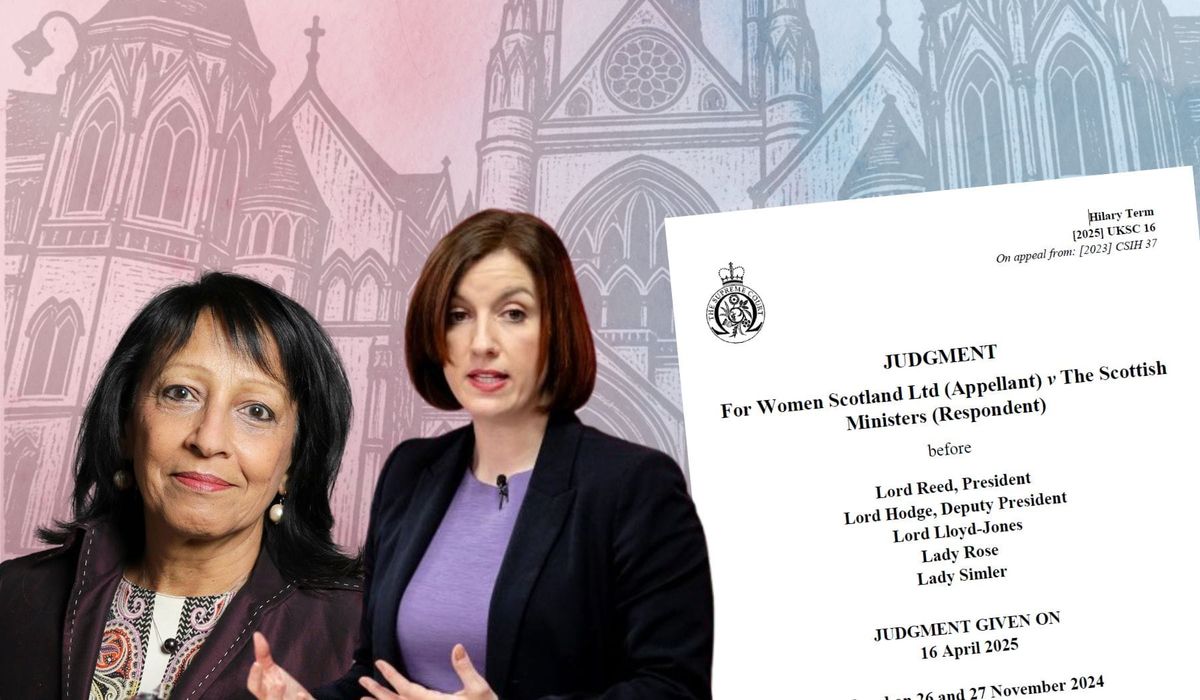
As with the denial of the palpable and widely accepted facts of climate change, the gender-critical movement has arrived at a dead-end approach, where they can only double down on language and rhetoric that is designed to polarise public opinion and exclude transgender people. They can only distort the reality we can all plainly see with our own eyes: that Trans+ people exist, that we deserve rights and protections along with every other citizen, and that blanket exclusion is cruel and unjustified.
Amongst all this, the sparks of hope from the past year inspire me to keep going every day. There is something uniquely galvanising about moments of crisis, that reveal diamonds in the dust of crushed hopes and dreams.
It reminds me of the story of Wilko Johnson, a former English teacher who found fame and acclaim as the guitarist with Dr Feelgood and Ian Dury & The Blockheads. In 2013, he was diagnosed with terminal cancer, and given 10 months to live. What then started as a final album and farewell tour resulted in a rejuvenated life and career that saw him live another 10 years. In his words, at the point where he felt his time was up, “that’s when I started to feel alive”.
My experience of the past year has been somewhat similar. The Supreme Court ruling left me processing heavy pain and fear that felt as if it had burrowed deep into my gut. But then I switched into something of a possessed state, determined to do all the things I’d been afraid of doing, distracted from pursuing, unsure if I could achieve. I am now part of multiple projects celebrating Trans+ voices, have worked with some of my Trans+ idols, and have a stronger and broader community of Trans+ people and allies. It’s an experience I know I share with many Trans+ folks in my circles.
I’ve also found, on the other side of daily worries, a strangely comforting realisation: it doesn’t matter how much good I put out into the world, I will still be judged and discriminated against for being trans. Sounds scary, even paralysing, but it’s become something of a quiet, self-motivating mantra.
If I or any trans person will be treated poorly, no matter how positive, honourable or justified we may be, then why worry about appeasing those who stand against us. We might as well put our energy towards pursuits and people that do fill us with joy and purpose.
The judgment last April was an example of a defining, but not definitive moment. One that showed people who its proponents really are, and motivates others to take action. The trans-exclusionary voices have made clear that they do not rely on facts, science, statistics, or sense, but instead a distortion of reality and common decency. The Trans+ community and their allies have demonstrated that strength lies in togetherness, action, joyful existence, and the knowledge that Trans+ experience is medically and socially recognised and supported.
There can be no illusion that things will be any easier going forward - if anything, they will be harder. But it is clearer still, as we found under the dark clouds of last spring, that we are stronger together, we will overcome today together, and we will smell the flowers of our struggle together.
In the years and months to follow, as the fight for Trans+ rights, inclusion and dignity continues, we may come to remember April 2025 and all it brought as the moment we “started to feel alive” again.
Get the Queer Gaze in your inbox each week with our free weekly newsletter or pitch to write an edition for us now.
We deserve good news too.
When there is so much hate out there, it's easy to get swept up in the doom.
QueerAF doesn't do that. We sprinkle in the joy that is the lifeblood of why being LGBTQIA+ is so simply wonderful.
And in the newsletter where this was first published, there was actually a bunch of positive news to celebrate. It shows me that despite the headlines knocking us down, we're getting right back up again and using our anger to fuel our fight.
While the rest of the media cashes in on hate about us, we can focus on queer joy - because you drive us. The community. QueerAF readers - not advertisers.
Our members directly fund our content. When you sign up, you get to have your say on how your funds are used. On what content we should commission.
But we turn down advertising and sponsorships in this newsletter so we can focus on delivering on content for you, not just clicks. That's why we need you to sign up to become a QueerAF member.
You'll join hundreds of awesome queer as f**k members who ensure we can keep our unique approach to queer content happen. If you want to see the media cover more stories about the joy in our lives - please, consider a membership. We can't run our outlet without you.