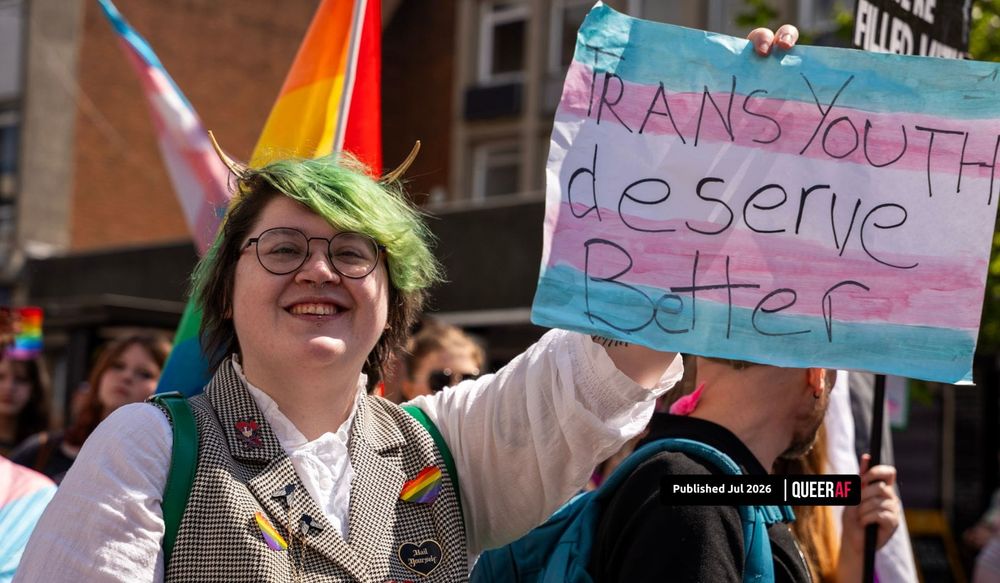
A year ago, I watched live as the Supreme Court handed down its judgment in For Women Scotland - determining that the word "sex" in the Equality Act 2010 meant "biological sex" with huge consequences for the trans+ community.
It wasn't a result that was anticipated, and I remember literally gasping out loud as the Supreme Court read out a summary of its decision – I had begun to realise what was coming next.
I had already been asked by QueerAF to cover the decision, but it quickly became clear that a rapid turnaround was needed. The decision caused panic, and the immediate discourse was being driven by anti-trans voices and well-meaning non-experts, leading to confusion and misunderstanding.
I worked at pace to get through the long and complex judgment, and then closely with QueerAF to ensure that what we put out was accessible for a terrified Trans+ community.
In just a few hours, we turned a very complicated legal decision into something ordinary people could begin to understand. If you're not a lawyer, it's hard to explain just how difficult that was.
And, shockingly, a year on – and having worked predominantly on the consequences of that judgment ever since – I can still stand by everything I wrote.
Looking back at my analysis a year later, I see where I identified the seeds of all the harm that has since bloomed. For example, I correctly noted that the decision would lead to the automatic exclusion of trans people from single-sex services for their lived gender (for example, trans women from women's single-sex services).
 QueerAF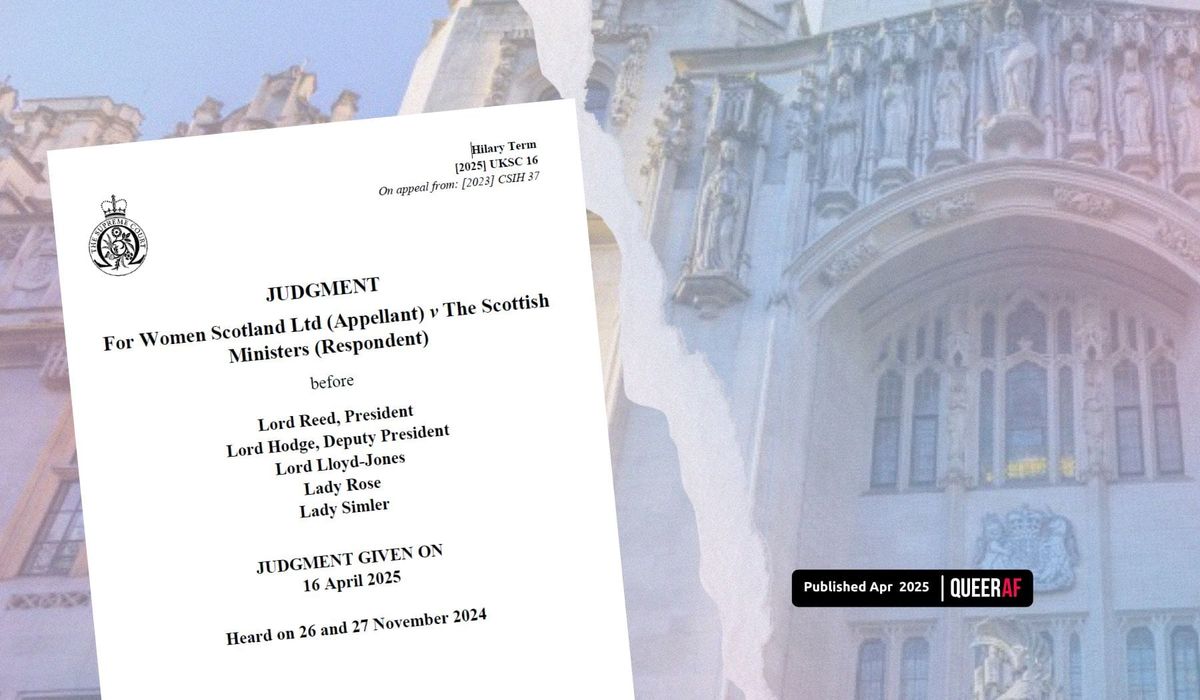
But I also noted what anti-trans campaigners later ignored – that service providers would still have to justify offering these single-sex services, or else they might still be discriminatory against trans people.
Nothing in the Equality Act 2010 requires single-sex provision. And there was no reason that services could not be offered for women, including both cis and trans women, as long as this could be justified.
These important points, missed by many in the months which followed the decision, would later be affirmed by the High Court in Good Law Project's challenge against the EHRC.
I also predicted that the decision would be "used as a rallying point for even further attacks on our rights". We have seen this in the increased emboldening of anti-trans rhetoric following the decision, and in the weaponisation of the judgment to force unwilling organisations to kick out trans people.
One example is the legal case against Hampstead Ladies Pond, brought by Sex Matters, demanding that the pond excludes trans people– despite a consultation showing users overwhelmingly want to remain trans-inclusive.
Anti-trans campaigners didn't even need to sue Girlguiding or the Women's Institute – who have succumbed to pressure from those demanding exclusion, causing tragic and unnecessary harm.
It's impossible to capture all that has happened in a year in a short reflective piece – but there is a takeaway that I can come back to.
Ours was the only immediate coverage led by a Trans+ journalist. Written by and for those most affected – following a decision about our lives where no trans+ people were heard. I am incredibly proud of what QueerAF and I achieved.
But I am even more proud of the work that's been done since – by myself, by QueerAF, and by others across the community – to keep defending Trans+ human rights.
 QueerAF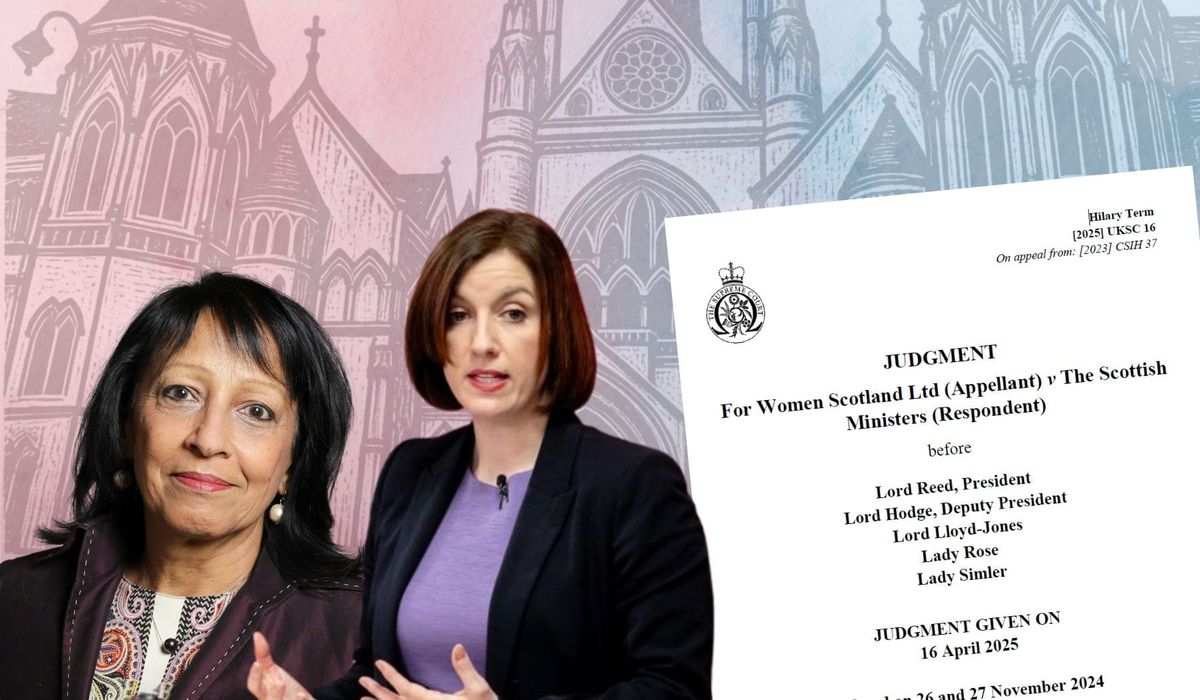

Very few people could have done justice to this story as Jess did
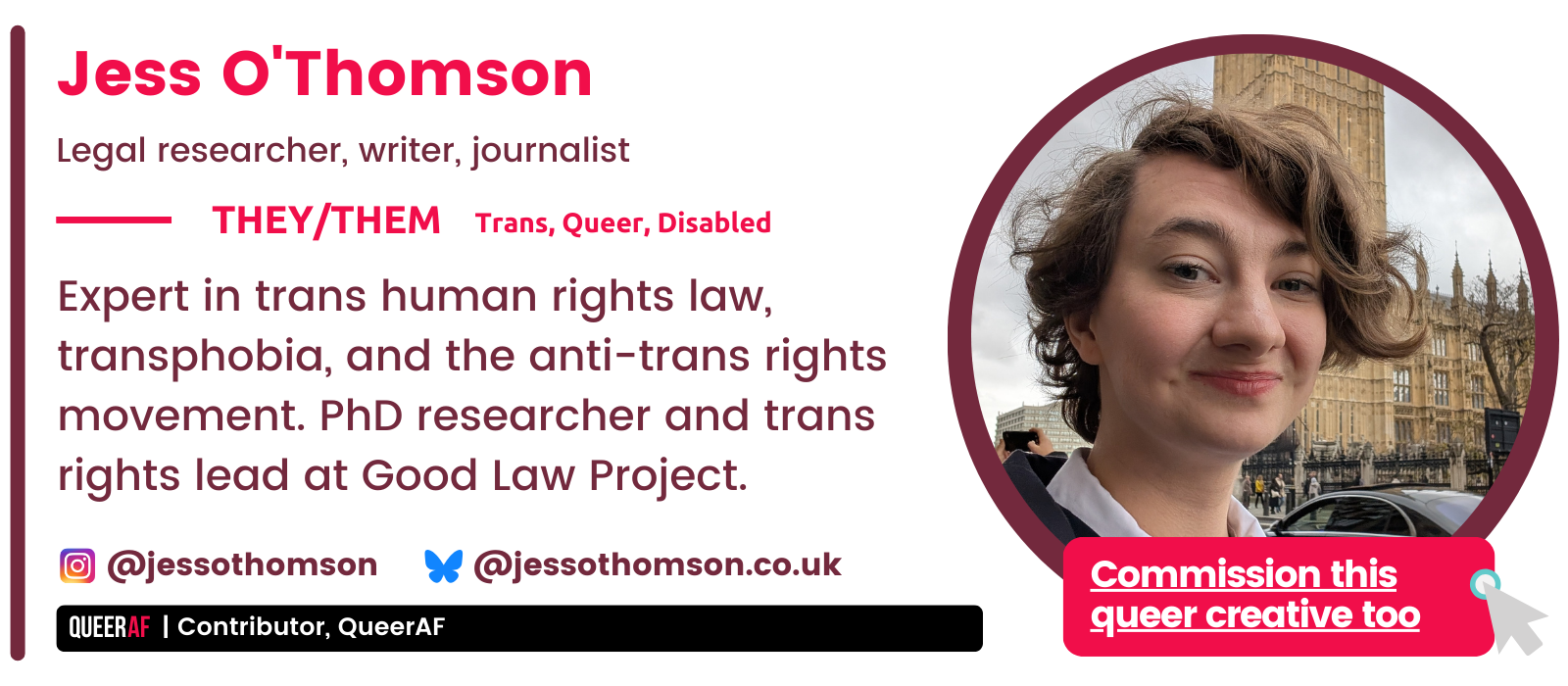
Not only is Jess O'Thomson an incredibly trusted and proficient Trans+ journalist, they are also an expert legal researcher. They are one of a handful of prominent Trans+ journalists in this country.
Their analysis of the Supreme Court ruling went on to become the go-to source for the LGBTQIA+ community, its leaders and ordinary readers like you - to understand this complex moment. It also picked up awards for its comprehensive, accessible and timely manner.
At the time, we said this ruling means “we'll likely see a raft of new legal challenges, political fights, and anti-trans propaganda that needs to be challenged.”
Another prediction, that like many featured in Jess’s piece, we wish had never come to fruition.
We can only win the ongoing fight ahead if we all get the information we need to cut through the noise. We need to use nuanced, detailed analysis as the base for our activism.
That's what QueerAF does best. That's why thousands of you read our newsletter every week. That's why we need you to upgrade to a QueerAF membership today.
If you valued Jess's analysis, and our approach - to hire Trans+ journalists to report on the Trans+ community, please subscribe to supporting QueerAF's journalism.
Every membership help us invest in a new generation of LGBTQIA+ journalists to give you the information you need to fight back.