

As the saying goes, nothing is certain in life apart from death and taxes. For many Trans+ adults in the UK, this means we have to spend a large chunk of our time earning money, often in a workplace.
The workplace can be a complex space to navigate for Trans+ people. Some are called a different name by their colleagues to the one their bosses see on official documents, which must be provided to prove right to work and receive wages. The gender marker recorded by HMRC, which an employer will see, won’t match many Trans+ employees' lived gender. So, while disclosing a trans identity ought to be a choice, in reality many workers are outed to their employers whether or not they would choose this.
Partly, this is an issue with Britain’s archaic gender recognition law. The process is so tedious that very few Trans+ people have obtained legal recognition of their gender, which would ensure the most privacy around gender transition. While it’s possible to gain some privacy and make daily life easier by changing your name and gender marker on other documents, such as passports and driving licenses, even this lesser gender admin is a significant piece of labour and bureaucracy that not all Trans+ people are willing to undertake.
Being out as Trans+ at work comes with its own set of challenges. In 2018, one survey found that one in three employers wouldn’t hire someone they knew was Trans+. There hasn’t been an update to the survey, but it would be surprising if that figure had improved given the raft of 'gender critical' employment tribunals attempting to create a more hostile working environment for Trans+ people in the intervening seven years.
Meanwhile, the legal landscape for employers of Trans+ people – particularly after 2026’s High Court ruling in Good Law Project vs EHRC – is increasingly fraught. There is a lack of clarity about what workplace rights Trans+ people really have, which can create a sense of doom when it comes time to look for work.
P v S and Cornwall Country Council: How one trans woman created Trans+ workplace rights
Compared to many other Western countries, “workplace rights for Trans+ people in the UK could be worse”, Oscar Davies, the UK’s first publicly recognised nonbinary barrister, tells QueerAF.
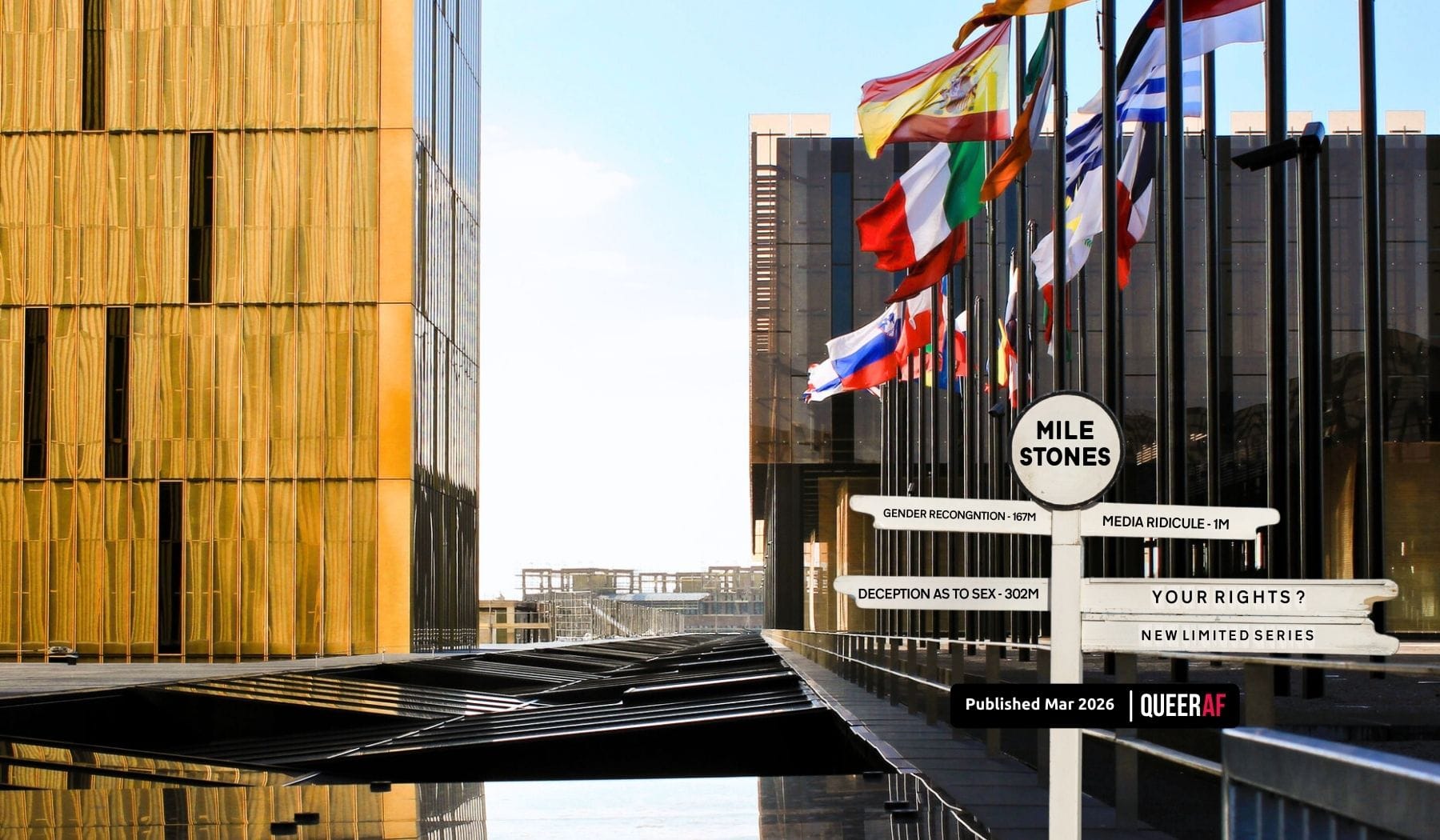
In 1996, a groundbreaking case against Cornwall County Council went all the way to the European Court of Justice. The woman who brought it won, and the outcome was the first case worldwide to provide Trans+ people with protection from discrimination in the workplace.
This means that, since 1996, it’s been illegal to fire someone in the UK for being Trans+. This is a workplace protection that Trans+ people have in very few places – in the majority of countries around the world, it’s not illegal. And in at least 13 countries, being Trans+ is itself criminalised and punishable with imprisonment or even death.
The case, P v S and Cornwall County Council (1996), was brought by a woman known only as P, who was sacked by Cornwall Council after coming out as Trans+. P argued that it constituted sex discrimination to fire her after she announced her plans to transition, while the council maintained she was fired due to redundancy. The British government said it was not sex discrimination to fire P for transitioning, because the law about equal treatment of men and women – the Equal Treatment Directive – did not apply to someone who was transitioning.
But the European Court of Justice rejected the arguments made by Cornwall County Council and the British government. It accepted that P was fired for transitioning her gender and ruled that this was sex discrimination – because P was unfairly treated compared to someone of her birth sex.
Before P, Davies says, “you didn't really have any trans protection” in the workplace. But since her case, sex discrimination protection in the UK has been extended to Trans+ people.
“Because of this case, it was considered that those undergoing gender reassignment could not be discriminated against, and the reason for that is that gender reassignment rights could fall under sex discrimination,” Davies says. “This later transpired into Section 7 of the Equality Act.”
Section 7 is the 'gender reassignment' protected characteristic in the 2010 Equality Act, which prohibits public services from discriminating against Trans+ people on the basis of their Trans+ identity. This means that the impact of P’s 1996 victory is still felt by Trans+ people today, and in areas of life outside the workplace, too: public services can’t discriminate against you for coming out or transitioning gender.
“And then obviously we have the weight of the European Convention on Human Rights, which has its own case law that really helps trans people,” Davies adds. For example, a 2017 case brought by a French Trans+ man made it illegal to require a Trans+ person to be sterilised in order to gain legal recognition of their gender.
But what about the Supreme Court's ruling?
With 2025's infamous ruling that trans women are not legally female under the Equality Act, many organisations and businesses – like Girlguiding and the Women's Institute – have begun rewriting their policies to exclude Trans+ people.
But is that in line with the law?
Two key cases brought by 'gender critical' women – Sandie Peggie and Maria Kelly – sought to establish that it's illegal to include Trans+ women in women's spaces at work. However, at the end of 2025, both women lost their cases.
Kelly objected to Trans+ women being allowed to use the women's office toilets at Leonardo UK, the defence company she worked at. A judge dismissed her claim, dating from 2023, that she had suffered harassment and sex discrimination as a result. The ruling clearly stated that Leonardo's toilet policy was a "proportionate means of achieving a legitimate aim" to create an inclusive workplace environment for trans staff that did not "put women at greater risk of violence, assault or have a greater impact on their privacy".
Sandie Peggie, an NHS nurse who was suspended after harassing a trans doctor and complaining about sharing a changing room with her, also lost her case in December 2025. The judge allowed her claim that NHS Fife had harassed her by taking too long to respond to her complaint, but dismissed her claims of discrimination and victimisation.
Both cases were seen by 'gender critical' campaigners as testing grounds for their aim to make the Supreme Court ruling into a requirement that Trans+ people be segregated from single-sex bathrooms and changing areas. The fact they lost was seen as a significant victory for Trans+ workplace rights at the time, amid ongoing debate about the meaning of the Supreme Court's decision in practice.
These victories, Davies says, partly came down to another policy governing workplaces: the 1992 Workplace Regulations, which mandate the facilities that employers must provide – including bathrooms and other gendered spaces. At that time, the workplace regulations had not been tested in court regarding the meaning of sex, and it was possible to interpret them as meaning sex on a trans-inclusive basis.
But then, in January 2026, a group of eight women known as the Darlington Nurses – who alleged they had been harassed and victimised when a trans woman colleague used the same changing room as them – won their case.
While the trans woman was cleared of harassment and discrimination by the tribunal, the judge ruled that the County Durham and Darlington NHS Foundation Trust had "violated the dignity" of the eight nurses by allowing a trans woman to use the women's changing rooms. Here, a trans woman in a women's space at work was not acceptable.
Less than a year since the verdict in For Women Scotland v The Scottish Ministers, confusion over trans inclusion in the workplace reigned. But not for long.

Good Law Project vs Equality and Human Rights Commission
The meaning of sex in the 1992 workplace regulations was finally tested in court in February 2026. In a case between the Good Law Project and the Equality and Human Rights Commission (EHRC), the High Court said that the workplace regulations mean single-sex spaces in workplaces should be based on birth sex, and that Trans+ people should not have access to those spaces according to their lived gender.
Instead of following the 1996 European ruling on P v S, which said that Trans+ people's sex is that which they are transitioning to, the judge in this case followed the Supreme Court ruling on 'biological sex' to interpret the workplace regulations differently.
"Whilst it is considered by some that the workplace regulations would follow P v S (in that acquired sex follows acquired gender), recently, Swift J in GLP v EHRC considered that sex under the workplace regulations means biological sex," Davies says. "This is not good news for trans people."
This made the picture for trans rights regarding single-sex spaces even more incoherent, with one set of rules for public services and another for workplaces. The judge in this case said that the workplace regulations mean employers who don't have gender-neutral facilities must provide single-sex toilets and changing rooms – and that trans people cannot use the facility of their lived gender.
Taken together, these verdicts offer a pessimistic view when it comes to Trans+ access to single-sex spaces in the workplace.
And unlike 'gender critical' campaigners, with their Rowling-funded legal slush fund, Trans+ people are less likely to be able to bring legal action to improve those rights. Doing so could not only help to build case law that further strengthens existing protections, but highlight that some protections – like the right not to be fired for being Trans+ – already exist.
"We need more courage to stand up against these moments of discriminatory conduct, because that's the only way that we're going to get the case law that helps us," Davies says. "If we don't, we're just going to get more gender-critical case law, which does not help trans people at all, nor, in my view, women or humanity at large."
Analysis: A Trans+ ‘workers rights crisis’
It's been nearly a year since the Supreme Court's verdict in For Women Scotland. In that time, multiple cases have attempted to make the legal situation for Trans+ people at work better – and failed to do so. Interim advice for businesses from the equalities watchdog was withdrawn, and new guidance has yet to be published.
Meanwhile, Trans+ people at work face increasing anxiety and confusion around which spaces they can go into, with many relying on their employers and colleagues to be inclusive instead of joining those who have prematurely banned Trans+ workers from gendered spaces. In this context, the Trans+ Solidarity Alliance has said there is a “workers rights crisis”.
At the same time, the right not to be fired for being, or coming out as, Trans+ is one that British trans people should not take for granted. It was hard won and it's an important legal right.
One thing we can take from the history of Trans+ rights the UK is that the road is not straight, smooth or short. It takes time to change both public attitudes and legal positions; the way law is made in the UK means contradictory rulings sometimes co-exist, and the path towards improving trans rights is often convoluted.
Legal cases, which form the backbone of civil rights, can take years or decades to bring. The cases that will change the direction of travel after 2025's Supreme Court ruling are in motion, but a long way from fruition.
In the meantime, Trans+ people will continue to exist and resist – as we always have.
Understand how we got here, so you can fight back
Milestones is a limited six-part newsletter that will unpack, explore and deliver you a critical understanding of how Trans+ rights in the UK have been shaped.
From the creation of NHS gender identity clinics, to the pivotal court cases that set precedents for rights that exist - but are under attack today.
This article is just a preview of what's to come in the series.
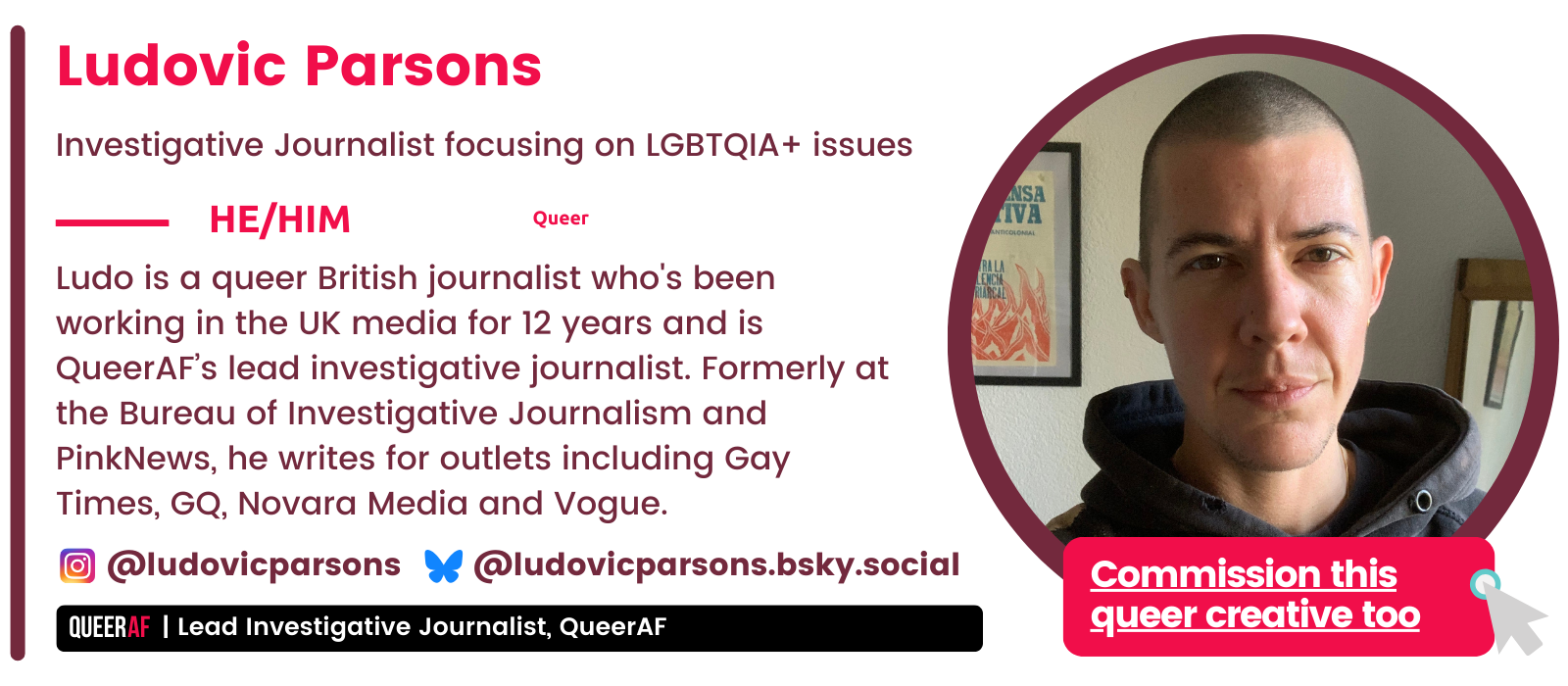
This special newsletter series has been written by some of the UK's most respected Trans+ journalists, Ludovic Parsons, Jess O'Thomson, Sasha Baker and Alexandra Diamond-Rivlin - with hours of research poured in.
Expect accessible, but comprehensive long reads on six themes:
- What court cases have shaped the rights of Trans+ people at work
- The history of the UK's Trans+ healthcare system
- How the media has shaped public understanding of Trans+ rights
- Legal gender recognition
- The way the criminal justice system is treating Trans+ people
- Different ways Trans+ communities have fought for rights