
Long before gender was policed and queerness was punished, they were sacred.
In the Philippines, trans and gender-diverse people once stood at the centre of spiritual life. Precolonial Filipino societies recognised figures known as babaylan, ritual leaders primarily in the Visayan region who served as healers, spirit mediums, historians, and political authorities.
Many babaylan were women, while others were asog or bayog, who were described by Western accounts as effeminate men or transgender individuals. Their gender variance was not only accepted but revered. Their authority did not exist despite their gender expression – it existed because of it.
Understanding the babaylan requires understanding Philippine history as a history of erasure. The Philippines was colonised for centuries: first and longest by Spain for 333 years, then briefly by the United States for 48 years, and later by Japan during World War 2. Spanish colonisation in particular fundamentally reshaped indigenous belief systems, which suppressed oral traditions and replaced them with Catholic doctrine that rigidly defined gender and sexuality alongside morality.
What survived was often reframed through colonial language, recorded by missionaries who viewed indigenous practices as pagan or demonic. Oral traditions were suppressed or filtered through colonial documentation. Gender fluidity, which was once integrated into spiritual and social life, was interpreted through the rigid binaries of European Christianity.
In precolonial communities, the babaylan occupied a central social position. They presided over rituals for healing, harvest, childbirth, and warfare. They often wore elaborate garments for these rituals, like layered textiles, gold ornaments, and ritual headdresses, which symbolised their spiritual authority. Ceremonies involved offerings and sacrifices to ancestral and nature spirits, as well as healing rituals and the singing of epics and chanting. Spanish accounts described babaylan entering trance states to communicate with the spirit world, a practice that colonizers found threatening – precisely because it represented a source of power outside Church and state control.
The presence of gender-nonconforming babaylan directly challenged colonial patriarchy. Spanish colonisers framed the babaylan as practitioners of devil worship and condemned transgender babaylan by branding their identities and practices as “sins against nature”, equating them with sodomy.
Babaylan often led resistance movements against Spanish rule. In the Tamblot Uprising (1621), Tamblot, a Boholano asog, urged his community in Bohol to abandon Christianity and return to indigenous beliefs. To him, revolt was a sacred duty. Similarly, the Bankaw Revolt (1621-1622) in Leyte, led by chieftain Bankaw and the asog Pagali, sought to restore native religious practices and autonomy. Although both uprisings were suppressed, they highlight how babaylan authority could mobilise organised anti-colonial resistance.
Spanish reprisals were brutal. Friars would order babaylan to be impaled on stakes or burned in order to terrorise communities into submission. Suppressing them meant suppressing not only spiritual authority and political rebellion, but gender ideology as well.
Much of what we know about the babaylan survives only in fragments. Philippine history prior to colonisation was primarily oral, and Spanish chroniclers selectively recorded their own version that aligned with colonial interests. As a result, babaylan histories were distorted, minimised, or simply erased. This absence from the historical record doesn’t mean the babaylan were insignificant – it’s evidence of systematic silencing.
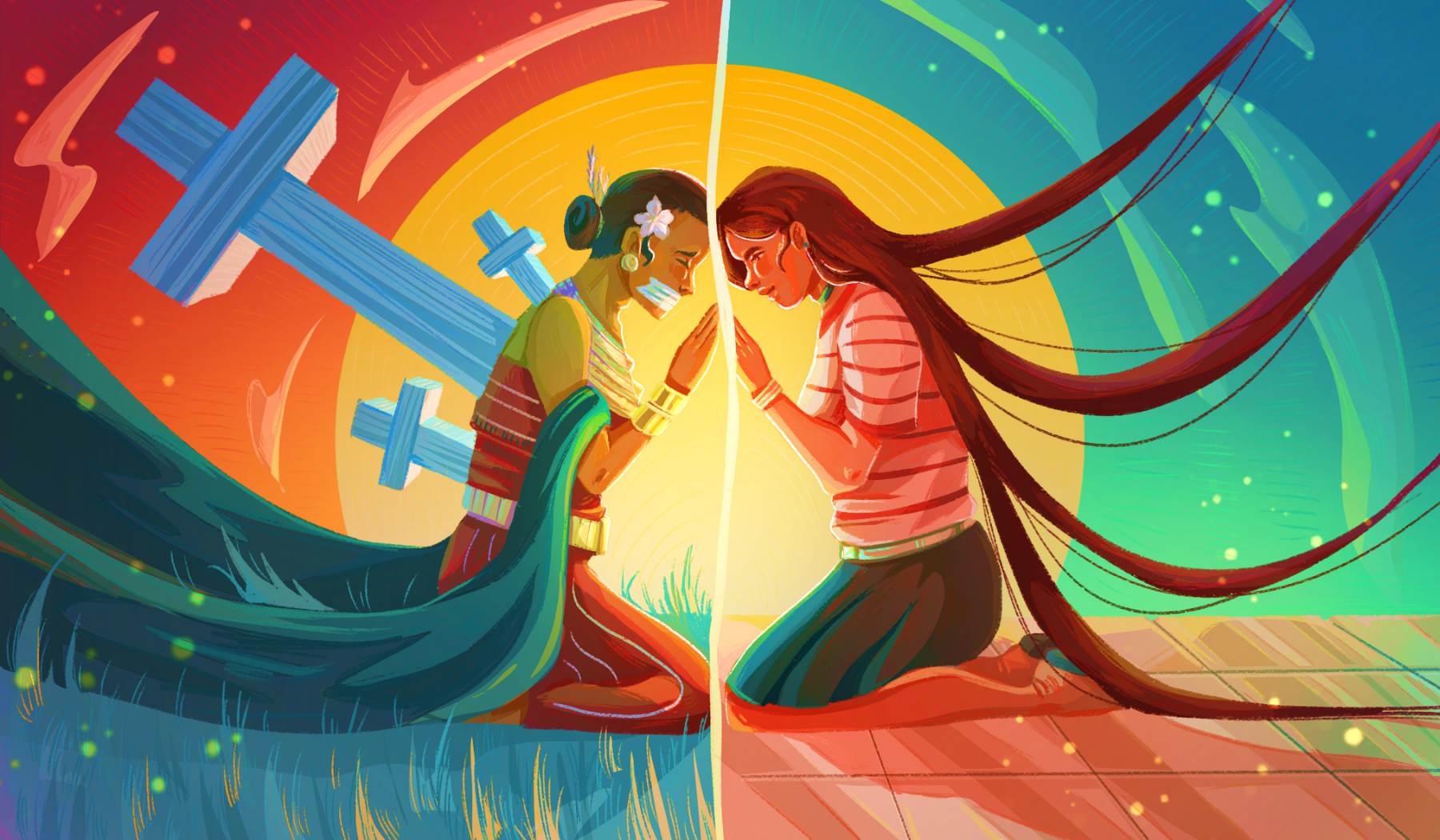
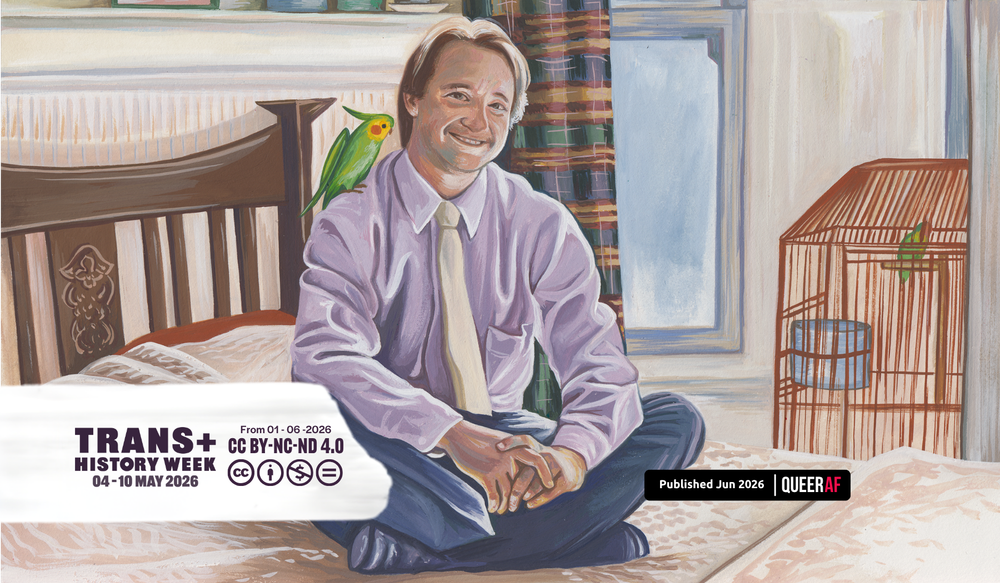
🎨 Artwork description, by Juniper Sephadi
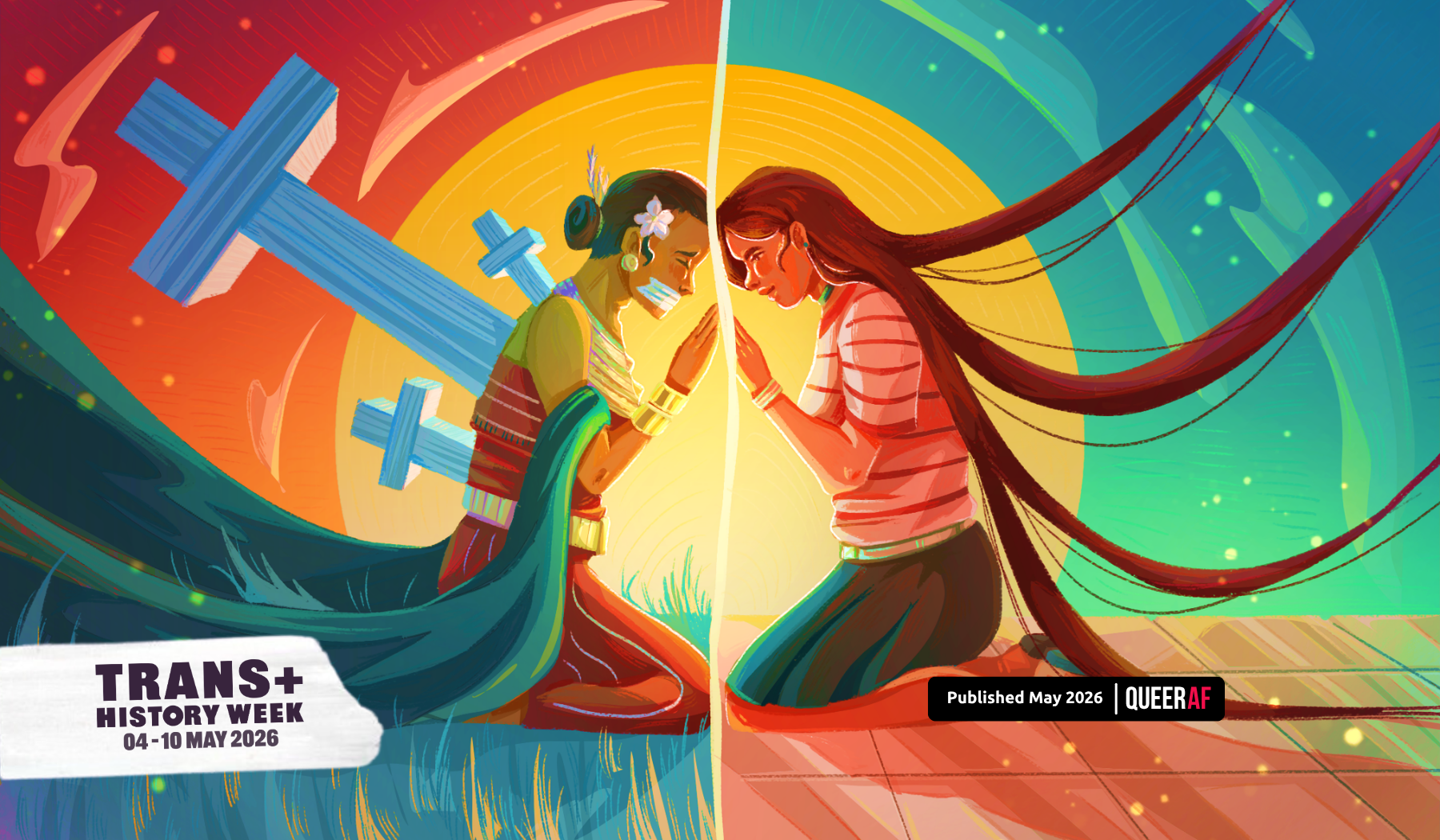
An illustration depicting the solidarity and parallels of trans women in the Philippines, both in the colonial past and present time. The illustration uses colours inspired by the Philippino flag and is divided in two. The left side features an Asog Babaylan, a spiritual leader and spirit medium who were described as effeminate men or transgender women. She is wearing traditional Visayan attire, with her mouth covered, her scarf pulled back, and crosses seemingly impaled on her back. These represent the silencing and violence done to the Babaylan's way of life and faith during colonial times, the way Catholicism erased both the Babaylan's beliefs and freedom in gender expression. The right side features a modern trans woman from the Philippines. Her hair is pulled back into strands, paralleling the Babaylan's scarf and showing the restrictions of being a trans woman in today's Philippines. Her attire mirrors the Babaylan's, with stripes on her shirt, a belt, a necklace, and a trans coloured bracelet. A difference is shown in the way her mouth is not sealed, and she is looking determinately and with love towards the Babaylan, representing the fight and activism of modern day trans women in the Philippines to bring back their roots before colonialism. A sun rests behind the two figures, connecting their stories. While the sun sets on the Babaylan, the sun rises on the modern woman, showing that the fight for trans rights in the Philippines is just beginning.
This colonial restructuring continues to shape modern Filipino attitudes towards gender. Contemporary debates about trans rights in the Philippines often surface only in moments of crisis, like after major hate crimes, legislative delays, or moral panic framed as “protecting Filipino values”.
For example, the long-delayed SOGIE Equality Bill is a proposed act that aims to prohibit discrimination against individuals based on their sexual orientation, gender identity, or gender expression. First introduced in 2000, it has been stalled for decades. Opponents frame the bill as granting “special rights” and stepping upon religious freedom, mischaracterising its simple core aim of prohibiting discrimination in employment, education, housing, and public services.
Among the most outspoken opponents of the SOGIE Equality Bill are Eddie Villanueva and his son Joel Villanueva, a congressman-turned-senator. Eddie, founder of the Jesus Is Lord Church, has repeatedly characterised the bill as a foreign imposition that undermines Filipino values. His son has similarly framed it as a slippery slope toward legalising same-sex marriage.
Yet the claim that protections for LGBTQIA+ Filipinos are “imported” collapses under historical scrutiny. Gender diversity existed in the archipelago long before Spanish missionaries arrived with Catholic doctrine. If anything was imported, it was the rigid moral framework used to police sexuality and gender in the first place.
The language of “foreign influence” obscures a deeper truth: what is often defended today as tradition is inseparable from centuries of colonial religious inheritance. This is a narrative that continues across many colonised countries, and one that can be combatted in the same way – by exposing the gender diversity that is weaved throughout the histories of so many countries.
In 2014, Jennifer Laude, a transgender Filipina, was killed in Olongapo City by U.S. Marine Joseph Scott Pemberton. She was only 26 years old. The case ignited national outrage – not only because of the transphobic violence involved, but because of questions around jurisdiction under the Visiting Forces Agreement between the Philippines and the United States. Pemberton was convicted of homicide – not murder – in 2015, and granted an absolute pardon in 2020.
Laude’s death exposed overlapping systems of gendered violence, military power, and neocolonial imbalance. That her killer initially received preferential treatment underscored how trans Filipino lives are devalued within both domestic and international power structures.
Seen through historical context, Laude’s killing echoes an older, more sinister pattern. Colonial authorities once sought to silence the babaylan’s spiritual voice with violence. Modern institutions continue to marginalise trans Filipinos through legal invisibility and social exclusion.
Activists such as Naomi Fontanos, executive director of Gender and Development Advocates (GANDA) Filipinas, and Erika Allosa, a prominent deaf trans advocate and community organizer, are often framed as challenging Filipino tradition. In reality, their work represents a reclamation of histories that colonialism attempted to erase. Their advocacy addresses real, pressing concerns from the queer community, such as disproportionate violence, barriers to healthcare, and employment discrimination.
The historical record, however fragmented, suggests that gender diversity is not foreign to the Philippines. It predates colonial rule. Contemporary trans advocacy can therefore be understood as cultural remembrance rather than betrayal.
This is not to romanticise the past. Precolonial societies were not utopias, and our knowledge of them is mediated through colonial texts and modern interpretation. But recognising babaylan and gender-diverse ritual leaders complicates the claim that trans identities are a modern or Western invention.
Growing up Catholic, I’ve been exposed to narratives that suggest that being queer is inherently wrong. I’d sit through homilies where gender and sexuality were spoken of in binaries: male and female, proper and improper, sacred and sinful.
But at home, I was fortunate. My mother’s progressiveness and openness created space for questions rather than fear or judgement. She did not need theology to justify love or dignity. Instead, she embodied it herself.
The quiet contradiction between institutional doctrine and the life in my own household mirrors the broader contradiction within Filipino society itself. What is often defended today as religious truth is inseparable from the colonial history that introduced it. To grow up Catholic in the Philippines is, in many ways, to inherit a moral framework shaped by Spain – one that displaced older understandings of gender that once held sacred space for people like the babaylan.
What can we learn from this history?
Looking back at the babaylan invites difficult but necessary reflection. If gender diversity had not been violently suppressed, Filipino concepts of leadership and care might look radically different today. Those futures were brutally stolen away from us. Justice, in this context, cannot mean legal reform alone; it requires reckoning with centuries of imposed norms.
The lesson of the babaylan is not only that Trans+ people existed centuries ago; it is that they mattered. They held communities together in moments of conflict and uncertainty. Their destruction was deliberate because their existence proved that another social order was possible.
The babaylan were silenced without being erased. To remember them is to insist that Trans+ liberation belongs not only to the future, but to the deepest layers of our past – an indigenous resonance that has been vibrating beneath the surface for centuries. Our past was defined by wholeness and interconnectivity, where the babaylan saw that no soul was left behind. To reclaim this history is to reclaim a future where everyone has a vital place in the communal prayer.
So we're three days into Trans+ History Week 2025. Have we convinced you of the power of investing in Trans+ creative talent to tell the millennia-old history of our community yet?
Can you see how it shuts down pernicous lies that queer and Trans+ identities are somehow new?
We've invested in over 20 Trans+ creatives, mentoring and even buying some professional audio equipment they can keep for life. It's a huge undertaking - but one we're not backing down from. If anything, we want to do more - and do it all your round.
QueerAF is the UK's only both press regulated and non-profit LGBTQIA+ publisher. And in the last few weeks, we've been working all hours to ensure that the UK's supreme court ruling on the legal definition of a woman - is understood by our community.
We were the only publisher in the country, mainstream or from the gay press, to work with a Trans+ journalist to cover the news. Indeed, to provide timely advice about what it means. Our stories have been used by the sector, and activists to fight back.
We can only win this fight if we all get the information we need to cut through the noise. We need to use nuanced, detailed analysis written from and for a queer perspective as the base for our activism.
That's what QueerAF does best. So please, we need you to upgrade today.
For all of Trans+ History Week, we're running a sale on our most popular membership. Grab it while it lasts:
15% off Monthly - £5.95 / 15% off Annual - £50.15
All memberships come with a number of perks like early access, a greater say on content, plus discounts on events and merch.