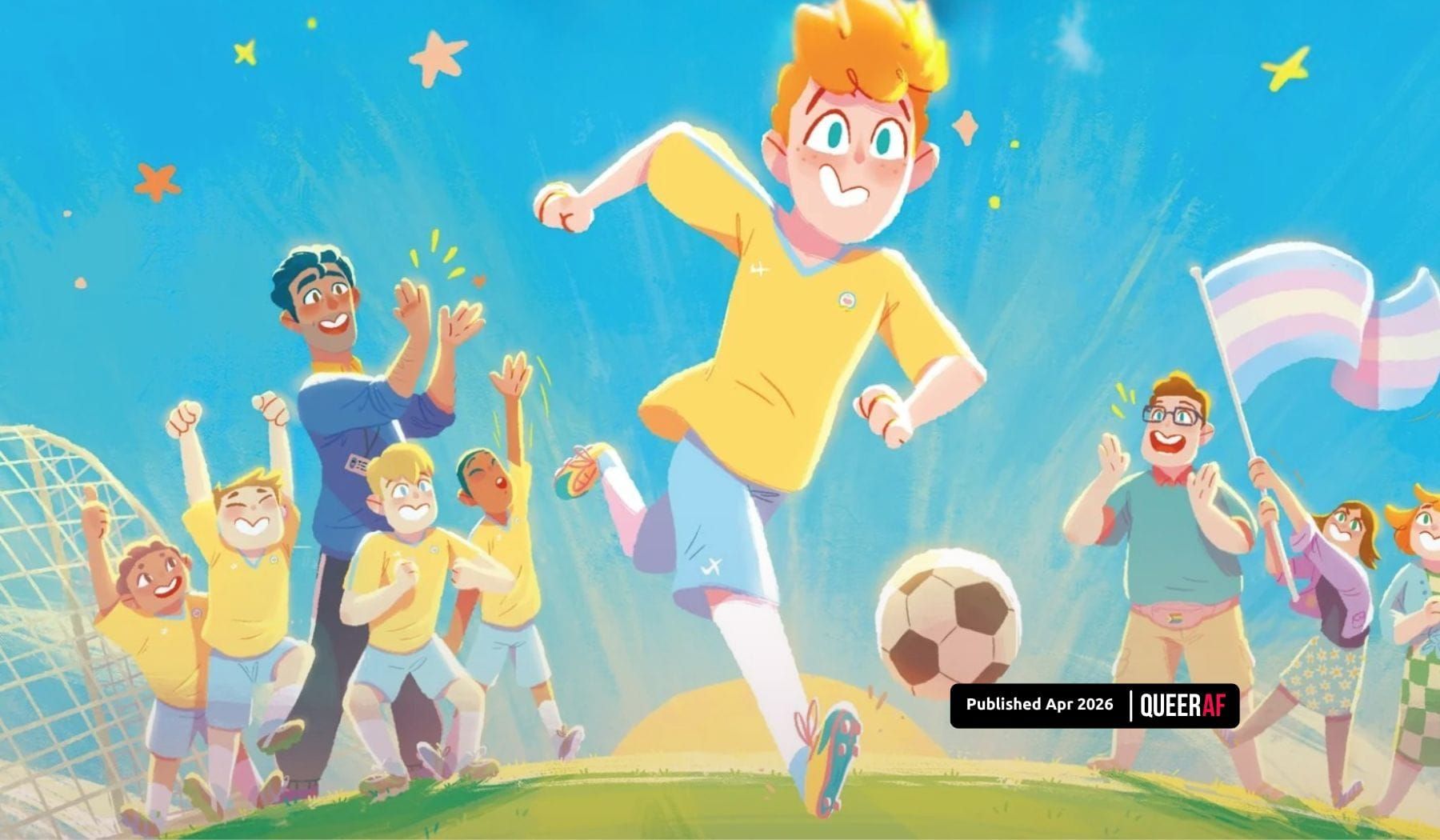


I played for a boys football team when I was a child. As a trans man, this experience is slightly unusual. Most of my transmasculine friends who play football grew up in the women’s game.
There was a local girls team, but I wasn’t a girl. I was adamant that I should compete with boys. Learning to do step-overs as the rain poured on a dreary Monday evening in January 2005 is a fond memory I still cherish two decades later.
I didn’t have the language to describe who I was back then, and neither did my coach – that didn’t matter. I was never made to feel any different to the other boys.
Returning to football as an adult, I hoped this would be the norm and not worth writing about. However, I fear that despite vastly increased visibility, today’s Trans+ children would not be as welcome as I was. The beautiful game has become ugly for Trans+ people.
In 2025, the English and Scottish Football Associations (FA) explicitly banned trans women from competing in FA-affiliated women’s football, claiming the Supreme Court ruling forced their hands. However, the Welsh FA have not implemented such a policy. Trans men have also been issued a de-facto ban, as the English FA requires us to sign a declaration that opens with “I am a biological woman”.
It’s not just football. Most recently, the Darts Regulation Authority announced that trans women will be banned from women’s competitions. The sport’s most prominent trans player, Noa-Lynn van Leuven, shared on Instagram that she was not told why she was no longer allowed to compete. There is no justification for bans: science supports inclusion.
A review of 52 studies into trans people’s inclusion in sport found that trans women’s physical fitness was comparable to cis women and does not support theories of inherent athletic advantage.
Undoubtedly, these policies will have an impact on Trans+ children. Currently, Trans+ under-18s can play football on any team in England at grassroots level. But why would they enter such a hostile environment knowing that as an adult they’ll be forced to hang up their boots? Non FA-affiliated spaces exist, but are mostly confined to larger cities, restricting access to inclusive football to those able to afford higher costs of living.
Reported incidents of transphobia in football have also increased astronomically in recent years. Kick It Out’s report sets out how reports of transphobic abuse in football have doubled in each of the last three seasons. Misogyny is also on the rise, with reports of sexist abuse in girls’ grassroots football also doubling in 2024/25.
Some of this abuse relates to gender policing in the children’s game. In late 2024, a campaign was launched in girls grassroots football titled “Girls can have short hair - get over it”. It was launched after two 11-year-olds were harassed by their opposition and supporters about their haircuts, which the football team said was “something our coaches are constantly having to address”.
These girls aren’t trans. Yet it is the result of the rampant anti-trans hate machine that accusations of young girls being ‘really boys’ are on the rise. Campaigning by the gender-critical movement for women to be narrowly defined, with the intention of excluding trans women, always ends up leaving out some cis women as well. Stereotypes about gender presentation hurt everyone.
Every child, cis or Trans+, should be able to play football. They should be able to step onto the pitch without worrying about whether their self-expression will make them a target. I was lucky to have this experience playing footie as a seven-year-old Arthur; all kids should be able to play with their friends free of pressure to conform to an ever-narrowing set of standards of gender.
Get the Queer Gaze in your inbox each week with our free weekly newsletter or pitch to write an edition for us now.
We deserve good news too.
When there is so much hate out there, it's easy to get swept up in the doom.
QueerAF doesn't do that. We sprinkle in the joy that is the lifeblood of why being LGBTQIA+ is so simply wonderful.
And in the newsletter where this was first published, there was actually a bunch of positive news to celebrate. It shows me that despite the headlines knocking us down, we're getting right back up again and using our anger to fuel our fight.
While the rest of the media cashes in on hate about us, we can focus on queer joy - because you drive us. The community. QueerAF readers - not advertisers.
Our members directly fund our content. When you sign up, you get to have your say on how your funds are used. On what content we should commission.
But we turn down advertising and sponsorships in this newsletter so we can focus on delivering on content for you, not just clicks. That's why we need you to sign up to become a QueerAF member.
You'll join hundreds of awesome queer as f**k members who ensure we can keep our unique approach to queer content happen. If you want to see the media cover more stories about the joy in our lives - please, consider a membership. We can't run our outlet without you.