We’re often taught to treat our grandparents’ as people to be wary of when we come out – people whose reaction might be awkward or quietly devastating. We are taught to manage expectations, to soften language and prepare for disappointment, with the familiar refrain that ‘they are from a different time’.
But that approach overlooks the nuances, care and love that the elder generation can have for queer family members.
In conversations about queer acceptance, the spotlight usually stays on parents, schools and institutions, but they are not the only places where values are shaped. Grandparents, when present, often influence how love and belonging operate within a family.
This is not a universal experience, of course. Many queer young people grow up without grandparents, while others lose them early or experience rejection. Grandparents are not a guarantee in young queer people’s lives. However, when grandparents do show up with openness, their positive impact on a queer grandchild’s mental health and family structure can be profound.
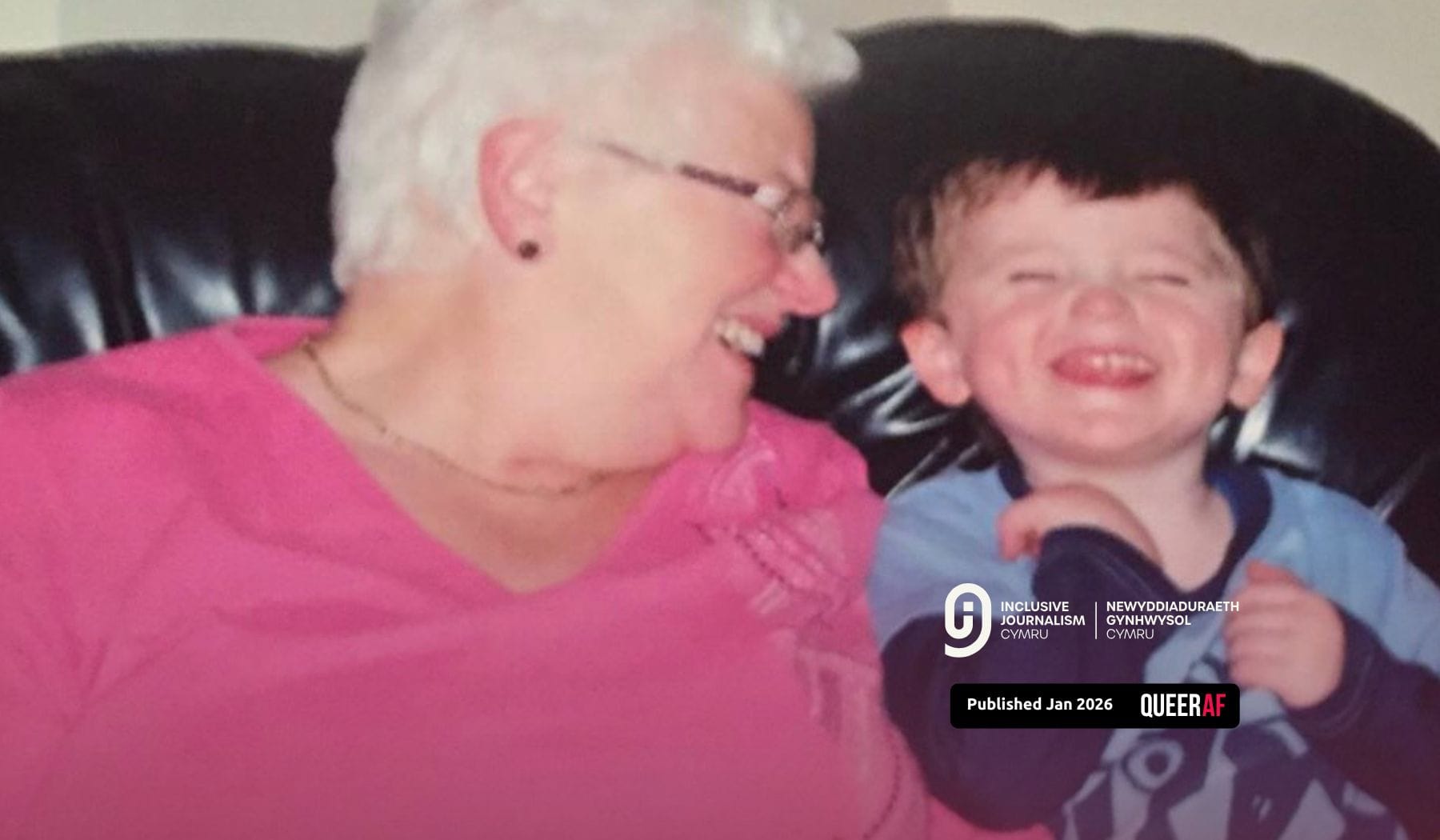
In my own family, my Grandma was the first person I came out to. She did not need reassurance; instead, she drew on the sense of self she had instilled in me my whole life. She assured me that I was made to be exactly who I was.
I will never forget that conversation with her in my parent’s bedroom. Her support echoed through my family, mirrored by the love in my Grandad’s heart. They raised their children with the same love, and the cycle continues. Acceptance became a guarantee, giving their queer grandchild permission to be authentic and flourish.
In working-class Welsh communities like the one I grew up in, grandparents often hold a particular authority. Families in the Valleys often live on the same street, which means the eldest members frequently take on a matriarchal role. Their approval carries weight, and there is often a sense of finality when they make their feelings known.
Research backs this up. Studies from Rutgers University suggest that many grandparents do respond to their grandchildren coming out with acceptance, even if they feel uncertain at first.
Groups like PFLAG have taken this seriously enough to create resources aimed specifically at grandparents who want to support their LGBTQIA+ grandchildren. Research on LGBTQIA+ youth shows grandparents can become vital sources of safety and belonging, particularly in cases where the young queer person expects disapproval at first.
Stories abound about the importance of and comfort in acceptance from ‘generation grandparent’.
Writer Eva Bloom’s grandmother instantly accepted their bisexuality and even expanded her understanding to support the author’s non-binary partner, responding that “no loving relationship is a sin”.
Trans+ influencer Kevin Ninh’s coming-out conversation with her 82-year-old grandmother, who responded simply by saying she could use whatever pronouns made her happy. The moment went viral not because it was dramatic, but because it modelled how uncomplicated acceptance from an older generation can be when love comes first.
From a sociological perspective, this influence is unsurprising. Families are key sites of primary socialisation, where norms and values are absorbed through everyday interactions rather than explicit teaching. While parents are often centred in this process, values are passed down intergenerationally, meaning parents often reproduce the attitudes they were raised with.
Grandparents play an indirect but significant role in shaping how queerness is understood within a family. When they show acceptance, their transferred norms can mean their queer grandchild is accepted by the whole family.
Of course, this factor can play out in the opposite direction too. For many queer young people, grandparents are not a source of safety. Older age groups, on average, are more likely to hold traditional views on gender and sexuality, shaped by the legal and religious frameworks they grew up with. This can show up acutely at family occasions and holidays like Christmas.
For journalist Charlie Rigoni, this led them to stop going home for Christmas after their parents advised them not to tell their grandfather about their new pronouns because “he’d still love you for sure, but he wouldn’t understand”. They have since chosen not to see him to avoid emotional harm.
Queer futures are built in many places. Online, on dance floors, at Pride. But they are also shaped in living rooms and kitchens. Grandparents do not always know best, but we shouldn’t overlook the power and importance of efforts to build understanding with this generation.
When grandparents choose openness and lead with care instead of fear, they pass down a sense of self-worth that lasts a lifetime. My grandparents chose me. They chose love.

Get the Queer Gaze in your inbox each week with our free weekly newsletter or pitch to write an edition for us now.
QueerAF has partnered with Inclusive Journalism Cymru
Together we're running a dedicated series of think pieces as part of a unique set of Queer Gaze commissions - our landmark writing scheme.
The articles are being written by three LGBTQIA+ journalists from Inclusive Journalism Cymru's network.
The Queer Gaze is a space in the QueerAF newsletter to commission emerging and underrepresented queer creatives to get published, receive mentorship, and kickstart your career.
Each commission comes with a unique 'retrospective' sub-editing session designed to put you in control of your article.
It's helping Welsh LGBTQIA+ creatives build journalistic craft and strategic communication skills.
You can support our work by becoming a QueerAF member.