

More than 20 years ago, a landmark decision was handed down by the European Court of Human Rights. The judgment in that case, Christine Goodwin v UK, changed the lives of not just of Trans+ people in the UK, but across Europe. It was a pivotal moment in Trans+ history – but now its significance is being erased.
Over the past year, we have seen a massive shift in Trans+ people’s human rights in the UK. Following the decision of the Supreme Court in the case of For Women Scotland, there have been suggestions of a nationwide Trans+ bathroom ban, which would have a devastating impact on our everyday lives.
Although the High Court recently dismissed the need for service providers to implement a bathroom ban in a challenge brought by Good Law Project, it also decided that trans-exclusionary toilets might be required in some workplaces.
To do so, it relied on a common misunderstanding of Goodwin in reaching that decision. That case, decided at a European level, is likely to play a significant role in the coming years. It is already a key feature of the Good Law Project’s grounds of appeal against the High Court in the case that could allow Trans+ segregation in the workplace.
So, what was the case actually about? And what does it mean for our future?
Christine Goodwin v UK: The background and significance of the case
Christine Goodwin used to work as a bus driver. She was a trans woman, born in 1937, who had been cross-dressing since the 1960s. In 1985 she started attending appointments at the Gender Identity Clinic in Charing Cross and began living ‘fully’ as a woman, undergoing surgery in 1990.
Christine ran into numerous obstacles throughout her life because the UK failed to legally recognise her as a woman. She brought a sexual harassment claim at work, but said her claim was unsuccessful because she was considered in law to be a man.
When Goodwin started work with a new employer, she had to give them her National Insurance number, which she feared could be used to trace her history. She requested a new number but was refused, and after supplying it, began experiencing issues at work, being told that everyone was talking about her behind her back.
Goodwin was told by the government that she would be ineligible for a state pension at the age of 60, the age at which women were usually entitled. Instead, she would have to wait for the male retirement age. Her records continued to state that she was male, and so she had to make special appointments for even trivial matters, or risk being outed.
On various occasions, Goodwin was put in a difficult position because she did not want to produce her birth certificate. This included access to loans, a re-mortgage offer, and entitlement to winter fuel allowance. When she had money stolen from her, she felt unable to go to the police for fear that she would be outed.
In 2002, Christine Goodwin brought a challenge to the European Court of Human Rights, saying that the failure of the UK to legally recognise her gender was in violation of her human rights.
Critically in a departure from its earlier decisions on Trans+ rights, the Court decided that her Article 8 right to respect for private and family life had been violated.

What did the decision in Christine Goodwin v UK mean?
In considering Goodwin’s case, the European Court of Human Rights decided that the UK had failed to comply with its human rights obligations by failing to legally recognise trans people as their acquired gender.
The Court recognised that a serious interference with private life can arise where domestic law conflicts with an important aspect of personal identity, emphasising that “conflict between social reality and law” places trans people in “an anomalous position, in which [they] may experience feelings of vulnerability, humiliation and anxiety”.
Trans+ people know this acutely in practice, whenever they are forced to show ID which outs them, or they receive a letter in their old name.
The Court concluded that “the unsatisfactory situation in which post-operative transsexuals live in an intermediate zone as not quite one gender or the other is no longer sustainable”, finding a violation of Article 8 – the right to respect for private and family life. Trans people should not be treated as their gender assigned at birth, or some third gender – they have to be recognised as the gender they have become.
A recent and persistent, but incorrect, narrative about the decision in Goodwin is that it was quite a narrow one about the claimant’s pension and her inability to marry. The High Court, in its recent decision about trans bathroom access, for example, claimed that Goodwin concerned only “civil status”.
But as outlined above, the substance of the complaint was far wider, covering numerous aspects of her life, and including employment discrimination. Unlike English cases, decisions of the European Court of Human Rights are not decided on a narrow ‘ratio’ to which the decision can be confined. They have to be understood as part of a wider context, and as considering broader principles.
It is from these principles in the Goodwin case that the UK developed the Gender Recognition Act.
How did the Goodwin case lead to the UK's Gender Recognition Act?
The decision in Goodwin v UK led to the development and implementation of the Gender Recognition Act 2004. In fact, the Gender Recognition Act went even further than the European Court of Human Rights decision in Goodwin, because it applied to a wider category of Trans+ people, rather than just those who were “post-operative transsexuals”.
Though not fully defined, at the time, this likely meant those who had undergone bottom surgery. It did not require any specific form of a medical intervention, and barring a number of specific exemptions contained within the Act, stated that receipt of Gender Recognition Certificate would change a trans person’s gender to their acquired gender “for all purposes”.
Subsequent decisions of the European Court of Human Rights have built on the decision in Goodwin. For example, in AP Garçon, the Court ruled that making legal gender recognition conditional on undergoing medical procedures resulting in sterilisation was incompatible with human freedom and dignity, in violation of Article 8. This expanded protection to more within the wider trans+ community.
In the most recent case of TH v the Czech Republic, in June last year, the applicant was non-binary but sought binary legal gender recognition as female. The court held that the failure to update the applicant’s identity documents unless they had undergone gender reassignment surgery was in violation of their Article 8 rights.
In reaching its decision, the Court noted it had attached significant importance to the “clear and uncontested evidence of a continuing international trend in favour not only of increased social acceptance of transgender people”. These subsequent decisions show that the trend in human rights cases since Goodwin has been towards increased legal recognition of Trans+ people, in protection of their human rights.
Analysis: What does it mean for our future and Trans+ rights?
The decision in Christine Goodwin v UK is one of the most significant decisions of the European Court of Human Rights, not just for Trans+ people, but as an important example of the Court ensuring that the Convention affords practical and effective protection to the most marginalised in society.
As Trans+ people’s human rights are being threatened in the UK, and there are increasing attempts to limit the day-to-day recognition of Trans+ people’s lived genders, the decision in Goodwin, and what exactly it means, are likely to be the subject of increased legal debate.
This much is evidenced by the recent – dismissive – decision of the High Court. But the case law makes it clear – it’s not acceptable to routinely out trans people, and treat them as a third sex.
In this context, it’s essential that our community is aware of its history, and able to resist attempts to erase what we have achieved. Goodwin was, and remains, a hugely significant and impactful moment in Trans+ legal history. We should not surrender it, and what it means, lightly.
Understand how we got here, so you can fight back
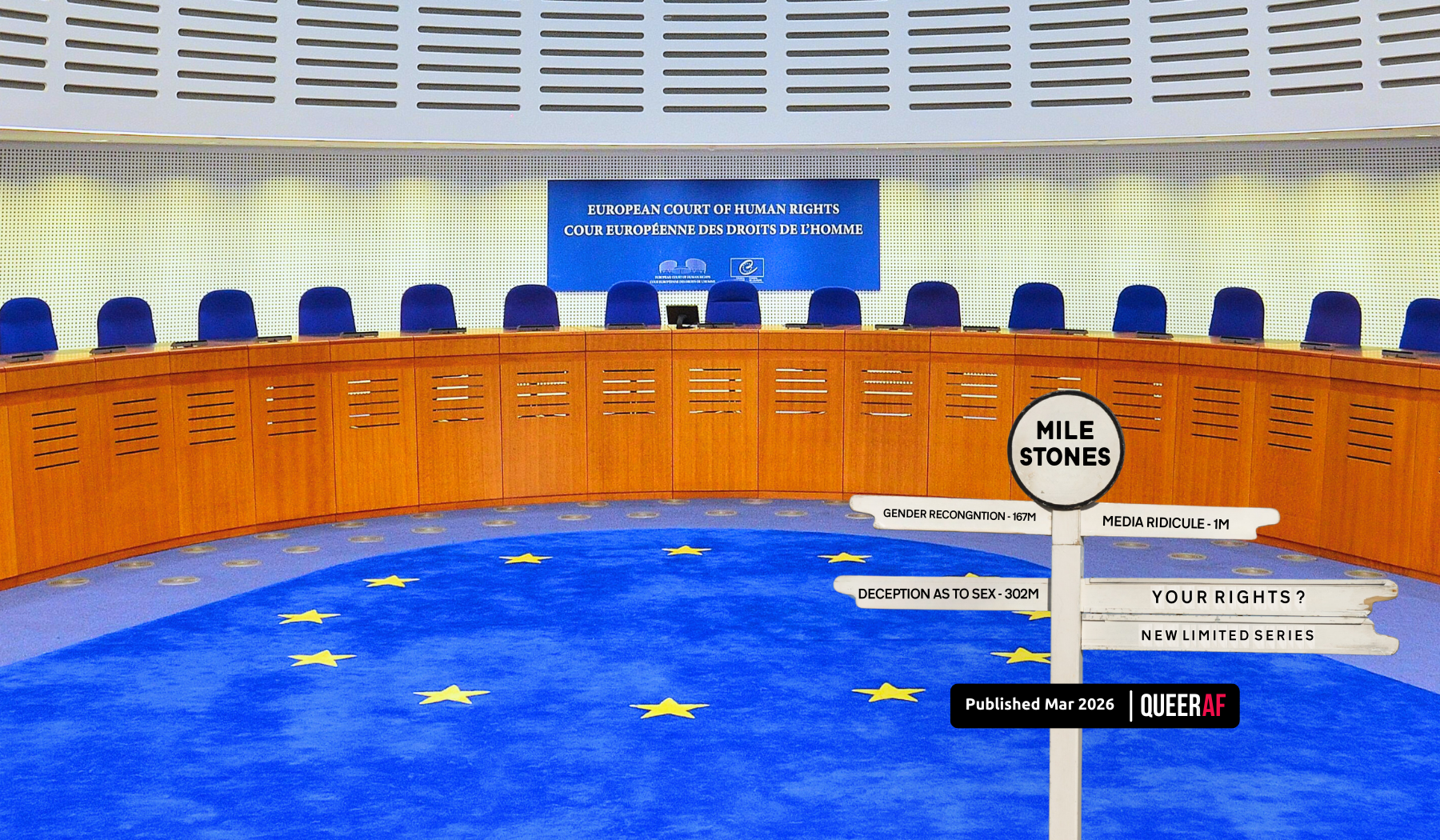
Milestones is a limited six-part newsletter that will unpack, explore and deliver you a critical understanding of how Trans+ rights in the UK have been shaped.
From the creation of NHS gender identity clinics, to the pivotal court cases that set precedents for rights that exist - but are under attack today.
This article is just a preview of what's to come in the series.
This special newsletter series has been written by some of the UK's most respected Trans+ journalists, Ludovic Parsons, Jess O'Thomson, Sasha Baker and Alexandra Diamond-Rivlin - with hours of research poured in.
Expect accessible, but comprehensive long reads on six themes:
- What court cases have shaped the rights of Trans+ people at work
- The history of the UK's Trans+ healthcare system
- How the media has shaped public understanding of Trans+ rights
- Legal gender recognition
- The way the criminal justice system is treating Trans+ people
- Different ways Trans+ communities have fought for rights