

In Book IX of the Iliad, Achilles tells us there are two possible ways he knows he’ll die. If he dies young in battle, his name will live forever. If he returns home, he'll live a long life, but his name will die with him.
In a world that’s hostile toward Trans+ people, it may feel like we have a similar choice.
We live our lives out proud as our true selves and accept that this choice comes with greater risk – or we hide our truths away, never truly self-actualising.
This is perhaps most obvious when looking at histories of Trans+ romance. Or at least, those that survive.
The older something is, the less likely it is to survive. That’s no surprise to anyone, I’m sure. But when it comes to Trans+ history, we have more than just the sands of time with which to contend.
Sadly, much of our history has been erased. Famously, that chilling image of one of the largest German Nazi book burnings in fact depicts the destruction of the world’s first Trans+ health clinic.
But beyond specific instances of hate, our lives and identities have been straight-washed by historians, leaving those of us who know better to read between the lines.
Hypsikrates lived during the 1st century BCE, and was married to King Mithradates VI Eupator of Pontus. In the literature, Hypsikrates is clearly described in a way that we might today consider transmasculine.
The historians Plutarch (Vit. Pomp. XXXII.VII-VIII) and Valerius Maximus (IV.VI) both tell us he cut his hair short, took on the masculine name Hypsikrates, dressed like a man, and fought like one too. We even have the base of a sculpture that clearly calls him Hypsikrates.
These two were very much in love, if the sources are to be believed. In fact, when Valerius Maximus tells us about the two, he does so in a section of his work devoted to the great loves of history.
And yet, both he and Plutarch refer to Hypsikrates by the feminine version of his name. He’s portrayed as a woman, doing “her” womanly duty to tend to “her” husband’s needs.
This is pure nonsense, of course. Nobody goes through a gender transition just because their partner wants them to. But hetero-washing this kind of story can make it more palatable to an audience uncomfortable with gender transgression. That audience would have been just as common in ancient Rome as they are today.
And yet, Hypsikrates’ gender transgression survives the historical record, despite our sources’ attempts to mould it into something else.
History writers aren’t the only ones who attempt to make Trans+ romances conform to the dominant cultural narrative.
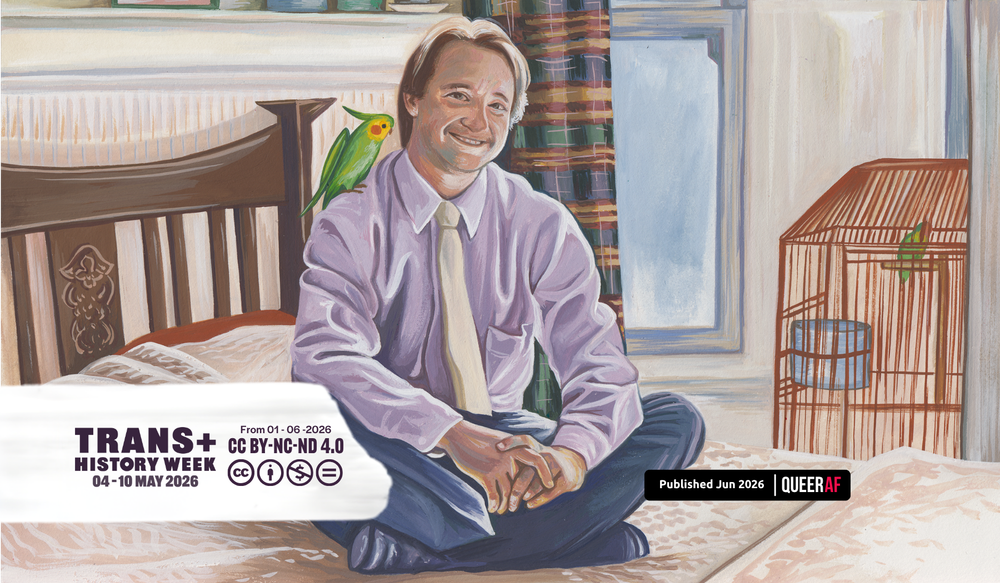
James Howe began living as a man in the 1730s, at age 16, when he eloped to marry a woman known to us only as Mrs. Howe. After an injury that led to a £500 payout, they purchased a tavern, then saved their money to buy several more. They lived at the White Horse Tavern in Poplar, where they became well-known and respected members of the community.
It seems they lived together for many years in a happy, successful marriage. All the while, however, an acquaintance from James’ childhood demanded increasing sums of money from him in order to keep his secret.
Mrs. Howe died in 1766, before her husband. Afterwards, the same acquaintance extorted James further. The details are complex, but they involved a criminal trial during which he was forced to disclose his transness publicly. He was, however, found not guilty.
So, how should we categorize this relationship?
On the nature of the couple’s behaviour in the privacy of their home, we can only speculate. But publicly, James Howe lived, worked, and socialised as a man for three decades. He crossed over the boundary of gender in 18th-century Britain. In a historical sense, this is a gender-diverse, Trans+ story.
However, we may not have known about James Howe if he hadn’t been forced to reveal his transness. This is common in the stories we know of “female husbands” at the time.
James Allen married his wife Abigail, and the couple lived together for 21 years. His transness was only discovered through an autopsy after his death. On the other hand, Charles Hamilton was outed by his wife after they’d been married for a time and she became suspicious of his gender. The list goes on.
Today, we might say these men lived ‘stealth’, or at least tried to. There’s nothing inherently wrong with that, of course. But from a historian’s perspective, living stealth means potentially erasing your transness. Had an autopsy not been conducted on Allen, and if Howe and Hamilton hadn’t been outed, they would likely have died obscure deaths, their lives largely unknown to us.
Perhaps that’s what these men would have wanted. We can’t know. However, it would leave us with fewer examples of a Trans+ person in the historical record. And for Howe and Allen, it would rob us of two examples of Trans+ love and romance.
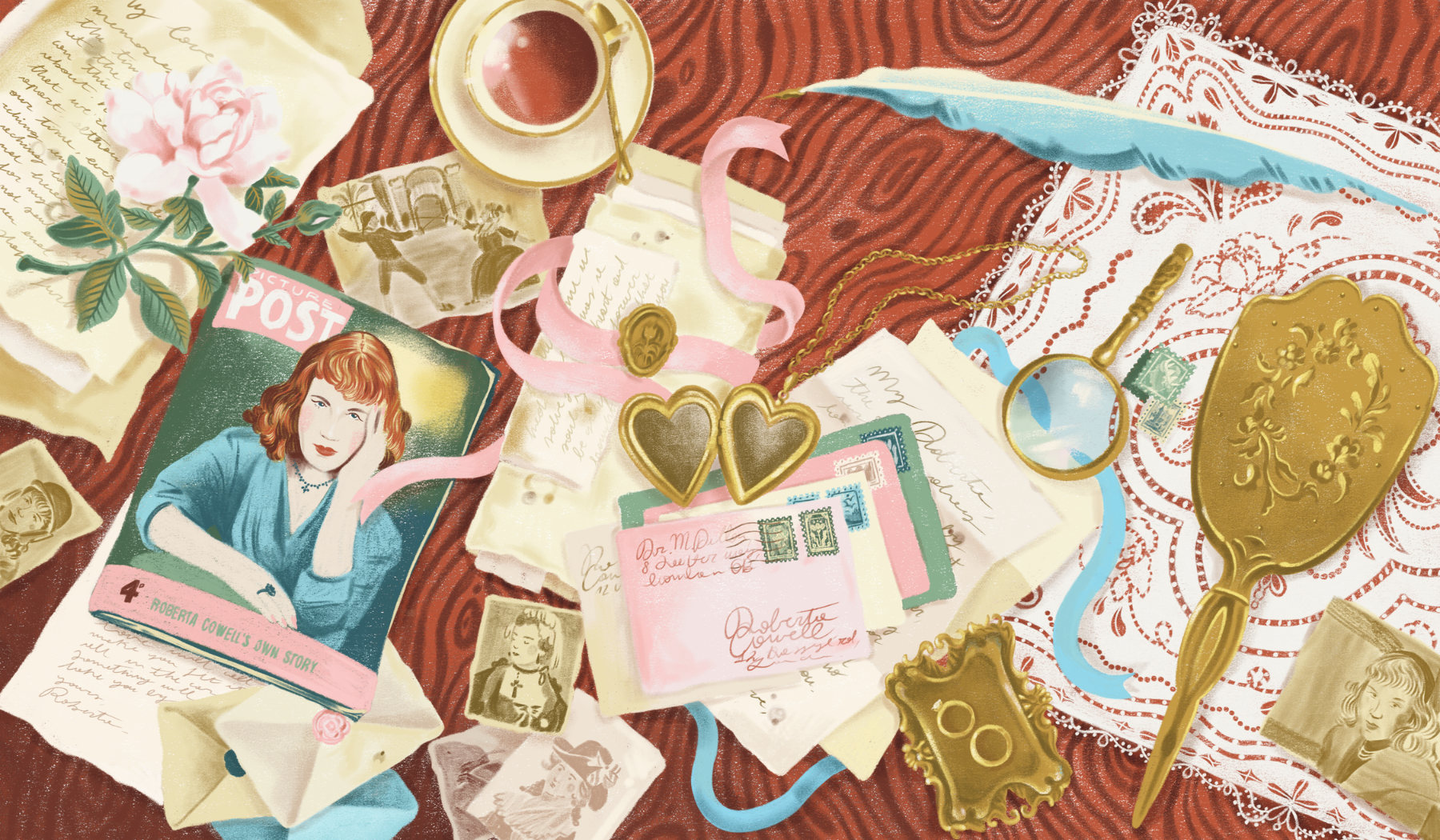
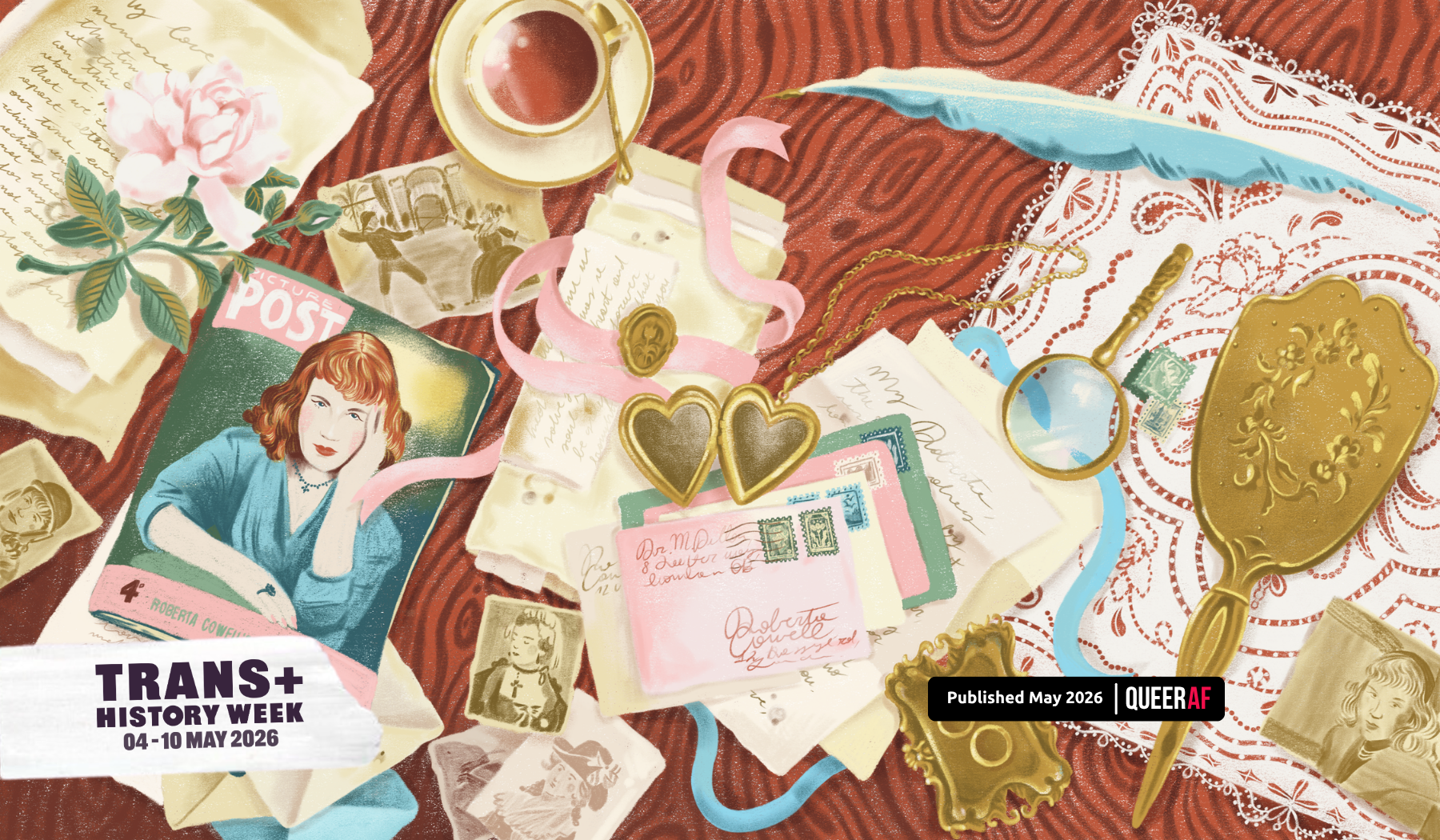
🎨 Artwork description, by Eli Dibitonto
For this digital illustration, I was inspired by the classic aesthetic associated with romantic love and correspondence, weaving it together with the real lives of trans historical figures discussed in the article like Chevalier d'Eon and Roberta Cowell. The scattered and messy composition in the piece suggests the idea of secret and forgotten histories being rediscovered and pieced back together. The textures, colors and pencil strokes are soft, welcoming, beckoning the viewer in, encouraging them to take up space in this shared history, with the focal point of the image being an heart shaped locket left blank. This element of leaving space for the viewer to identify themselves in the piece wasn't intentional at the beginning, but it presented itself and became more relevant the more we worked together on the scheme.
Court records are also the main source for what we know about the Chevalièr d’Éon, an 18th century French scholar turned diplomat turned spy turned writer turned lady-in-waiting, whose life has been highly scandalised and dramatised, and a big part of that is because of a focus on their own memoirs.
D'Éon presented as both masculine and feminine at different points in their life, sometimes (but not always) as part of their career as a spy. As a result, their "real" gender was a constant question throughout their life, and they never offered much in terms of a concrete answer.
Though we can’t define people by our own standards, if they were around today, we might view the Chevalièr as gender fluid, defying any attempt to fit them into a specific gender box.
Having been exiled from France by King Louis XV, they sought to return after the King's death. This led to ongoing negotiations, during which they were eventually declared a woman by the French government. Even after that point, however, they often continued to wear masculine clothing.
Later in life, they lived with a widow named Mrs. Cole, who took care of them after an injury left them paralyzed. There may not have been a romantic aspect to this relationship, but Mrs. Cole must clearly have cared for D’Eon.
Love, like gender, is more expansive than we sometimes think.
Two centuries later, Michael Dillon, famously the first trans man to receive phalloplasty, had a close friendship with Roberta Cowell, the first known British trans woman to have had gender affirming surgery. She sought him out after he published his book Self in 1946, where he defined his belief that trans people should be allowed to modify their bodies as they see fit.
They wrote letters back and forth for some time, which survive today. These letters make it pretty clear that Dillon developed romantic feelings for Cowell, but they were unrequited.
Not every romance has a happy ending. But we know of Roberta Cowell and Michael Dillon because they lived openly as themselves. In fact, it seems as though Dillon’s book Self may have encouraged Cowell to begin presenting openly as a woman.
As historians in general, we must eventually face the reality that many of our questions are fundamentally unanswerable. This is especially true in histories that have been repressed. But despite this, across the centuries, we find people who look like us.
How many more stories like this might there have been throughout the past?
How many more Trans+ lives have faded away, never to be understood for what they truly were?
How many Trans+ people throughout history have chosen the path Achilles declined: the path of a quiet life and death?
Let us not judge or shame Trans+ people for hiding their truth, in history or today. Instead, let us continue to work toward a world where hiding is no longer necessary.
So what do you say? Shall we all get sweaty on the dancefloor later?
Our history has been deliberately hidden. It takes a concerted effort to make it available to all. And when that work is over, relishing in the small moments from the dancefloor, to being cuddled up on the sofa - are the way we reenergise and get ready to pick the fight up all over again tomorrow.
In a time of acute political attention on Trans+ rights and a growing intensity of attacks in the media, it is a critical moment to expand the learning of our history - and use it to fight back with.
Knowledge of our past is fundamental for our future liberation, so it’s crucial that the critical Pride season ahead is, again, grounded in our history.
You can help us get the word out, invest in more talent and ensure everyone here's our message by upgrading today, to support our unique approach to journalism and content creation.
One that, as a non-profit, sees us reinvest everything back into our mission to change the newsroom, to change the country. Help us fight back today.
To celebrate Trans+ History Week, we're running the Always Been Here sale to entice you even more. You can get 15% off both the monthly and annual '100% QueerAF' subscription:
15% off Monthly - £5.95 / 15% off Annual - £50.15
All memberships come with a number of perks like early access, a greater say on content, plus discounts on events and merch.